Steinernema carpocapsae

Green icon of a mite on a green background

What is Steinernema carpocapsae

Steinernema carpocapsae are microscopic beneficial nematodes used in biological pest control to target a wide range of insect pests. These tiny roundworms naturally parasitize insects and are commonly used in agriculture and horticulture to reduce pest populations without chemical insecticides.

Once applied to plants or soil, the nematodes search for suitable insect hosts. After entering the pest through natural body openings, they release symbiotic bacteria that quickly multiply and kill the insect host within a few days. The nematodes then reproduce inside the insect and release a new generation that continues searching for pests.

Because they work invisibly and leave no residues, these beneficial nematodes are widely used in integrated pest management (IPM) programs for greenhouse crops, vegetables, ornamentals, lawns, and outdoor production systems.

The life cycle of Steinernema  carpocapsae:

The complete life cycle of Steinernema carpocapsae takes about a week and consists of an egg stage, four juvenile stages, and an adult stage. Only the juvenile stage — called the infective juvenile — can actively locate and enter a host.

Once inside the host’s body cavity, the nematode releases a symbiotic bacterium (Xenorhabdus sp), which multiplies rapidly and kills the pest. The nematode then feeds on the bacteria and reproduces inside the host. After several days, a new generation of infective juveniles emerges, ready to find and infect more pests.

Although these nematodes are microscopic and not visible to the naked eye, their life cycle allows them to provide continuous biological control in the soil or growing medium and on plant leaves.

Why growers love it:

  • Controls a wide range of insect pests like caterpillars, flea beetles, flies, crickets, etc
  • Works in soil and on plant surfaces
  • Reproduces inside pests for ongoing control
  • Compatible with IPM programs
  • Leaves no chemical residue
  • Safe for people, plants, and beneficial insects
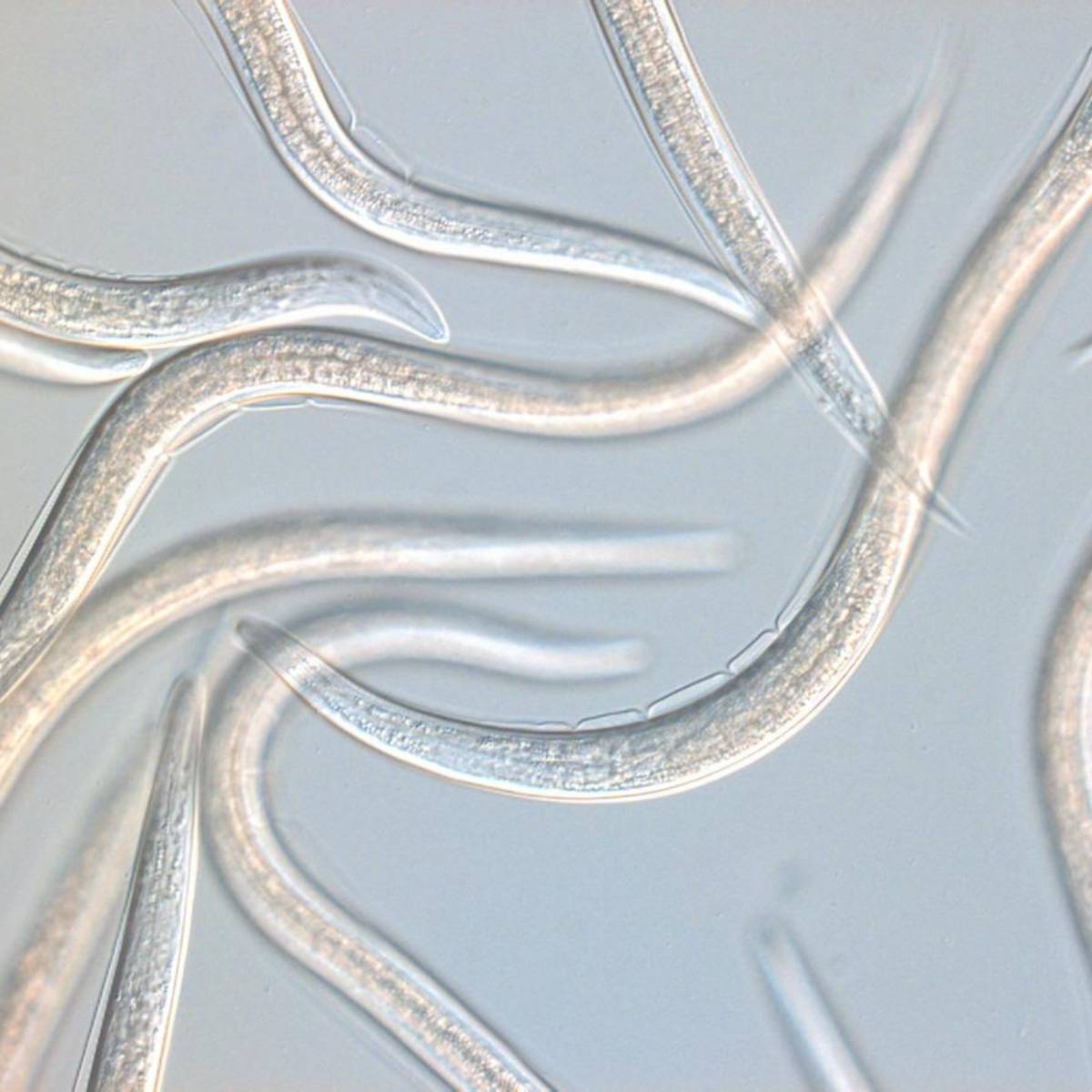
Close up image of capsanem: Seinernema carpocapsae
Worm-like structures on a metallic surface
Close-up of helminth worms on a light blue background
Microscopic view of a nematode on a gray background

When to use Steinernema carpocapsae

Preventive use:

  • Apply before pest larvae establish or when target pests are first noticed.

Curative use:

  • Use when you detect pest larvae or pupae in the soil or on plant leaves. The nematodes parasitize these immature stages, reducing future caterpillars, flea beetles, or moth populations.

Environmental conditions:

  • S. carpocapsae is more active in moderate soil/air temperatures (ideal ~14–34°C), but performs best at temperatures between 19-31°C/66-88°F
  • Very high soil temperatures (> 35°C) or very low (< 5°C) can kill nematodes.
  • Nematodes are susceptible to ultraviolet light (UV). Do not use them in direct sunlight.
  • Moisture content must stay high in the soil for several weeks after application.
  • For foliar application, spray nematodes when relative humidity will exceed 75% for several hours after the treatment.

How to release Steinernema carpocapsae

Proper release techniques ensure the nematodes establish quickly and begin controlling pests effectively:

  1. Prepare the suspension: Mix the nematodes gently into water. Keep the tank or sprayer gently agitated so they don’t settle.
  2. Application method: Use a hose-end sprayer, watering can, spray tank, airblast sprayer, sprinkler system, irrigation system, backpack sprayer, or vehicle-mounted spray unit.
  3. Tank conditions: Water temperature should not exceed ~25°C. pH should be between ~4 and 8.
  4. After application: Keep the soil moist for several days to help nematodes move and infect larvae. For foliar applications (if used), aim for high humidity (RH > 75%) for several hours afterward.

For best results, releases should be integrated into a broader IPM program that includes monitoring, sanitation, and complementary beneficials.

Formulations & How to choose

Box
  • Description:
    • Contains nematodes in biodegradable carrier material for easy watering
  • Best use:
    • Use when you want to prevent or control the amount of caterpillars, flea beetles, or other pests in your growing space.

Tips for Selecting Rate:

Choosing the right amount of Steinernema carpocapsae ensures you get strong, reliable control of caterpillars and soil pests. Here’s a simple way to match the rate to your needs:

  • Standard application rate: Apply 250,000–500,000 nematodes per square meter depending on pest pressure.
  • Light to moderate pressure: 250,000 nematodes/m² is typically enough for preventive applications or low pest levels.
  • High pest pressure or problem hotspots: Use 500,000 nematodes/m² to quickly reduce larval populations.

Pro tip: For most growers, starting at the higher rate for the first application and then maintaining with the lower rate provides excellent long-term suppression.

 
Capsanem 50 million box

Monitoring & Follow-up

  • Within a few days: Nematodes locate and infect pest larvae (e.g., caterpillars) and release their symbiotic bacteria.
  • Around 5–7 days: The infected larvae usually die and start breaking down, with nematode reproduction occurring inside.
  • Over the following weeks: A new generation of infective juveniles emerges and can continue to seek out more hosts, helping to maintain control.
  • Monitoring: You may notice fewer pests (e.g., fewer caterpillars) over time. Regularly check growing media for reduction in larval activity.

Tips for Growers

  • Apply in low UV lighting, and in correct environmental conditions (14-34°C).
  • Always keep the growing medium damp during and after application so nematodes can thrive.
  • Use complementary IPM strategies (sticky cards, cultural practices) to reduce pest pressure while nematodes establish.
  • Track application date, conditions, and pest levels. This helps refine future nematode use in your crop.

A: You may begin to see pest decline in the first week as larvae die. Full effect can take a couple of weeks as new nematodes emerge and infect more hosts.

A: It’s effective against caterpillars, crane flies, shore flies, crickets, flea beetles, and wireworms or click beetles.

A: Yes — preferably through a low-pressure, pressure-compensated irrigation system. Avoid very fine filters (< 0.3 mm) that could trap the nematodes.

A: Yes, but avoid harsh chemicals. Keep pH between ~4–8. Use biocontrol-compatible adjuvants or anti-desiccants if needed.