Encarsia formosa

Green icon of a mite on a green background

What is Encarsia formosa

Encarsia formosa is one of the most widely used biological control agents in greenhouse and protected crop production for suppressing whitefly populations. This tiny parasitic wasp is especially effective against Trialeurodes vaporariorum (Greenhouse) and Bemisia tabaci (Tobacco) whiteflies. It’s a cornerstone of many integrated pest management (IPM) programs aimed at reducing chemical input while maintaining crop quality and yield.

Unlike predators that consume pests directly, Encarsia formosa works by parasitizing whiteflies, interrupting their life cycle and preventing them from reproducing.

Here’s What They Look Like at Different Stages of Their Life:

Because the parasitoids are small and discreet, growers often recognize their activity by observing signs of parasitism on the pest rather than seeing the wasps themselves:

  • Egg: Females deposit a single egg inside a whitefly larva. This is microscopic and cannot be seen without magnification.
  • Larva: The wasp larva develops within the body of the whitefly pupa, consuming it from the inside.
  • Pupa: As the larva matures, the whitefly pupa hardens and changes color, often becoming brown or black and slightly swollen. These “mummies” remain attached to the undersides of the leaf and are the most obvious sign that parasitoids are establishing themselves.
  • Adult: Adult Encarsia formosa are tiny, approximately 0.5 mm long. The females have a brownish-black head and a yellow abdomen. Males are entirely black. They use visual and chemical cues to locate whitefly hosts on leaves. Adults are difficult to see with the naked eye, but are very active in searching for hosts.

Why Growers Love It:

  • Prevents pest reproduction by parasitizing whitefly larvae
  • Integrates seamlessly with IPM strategies
  • Helps reduce reliance on chemical insecticides
  • Safe for workers, beneficials, and the environment
  • Can cycle through the crop, providing ongoing suppression
  • Visible control via whitefly “mummies”
A wasp parasitizing a whitefly pupa
Parasitized Whitefly pupa by Encarsia formosa
A wasp with a black head and yellow abdomen
A encarsia formosa pupa encased in a whitefly pupa.

When to use Encarsia formosa

Timing is critical to achieving success with parasitic wasps. They perform best when introduced before pests reach outbreak levels.

Preventive use:

  • Introduce Encarsia formosa at the first signs of whitefly or even preventively in crops with a history of whitefly pressure.

Curative use:

  • Effective when Trialeurodes vaporariorum (Greenhouse) or Bemisia tabaci (Tobacco) whitefly species are already present, especially at low to moderate population levels.
  • Multiple releases will be required if pest pressure is high or the crop is mature and dense.

Environmental Conditions:

  • Most effective at temperatures between 20°C and 25°C (68 and 77°F).
  • Very high temperatures and very low humidity can slow its activity.
  • At a 24 hour average temperature below 17°C/63°F, the control of whiteflies may be insufficient.
  • Suitable for vegetables, ornamentals, herbs, and indoor plant production.

Note: Monitoring is essential. After 14-21 days from the first release, inspect the undersides of leaves to determine if additional releases are required. Specifically look for adults and mummified whitefly pupae.

How to release Encarsia formosa

Proper release techniques ensure Encarsia formosa establish quickly and begins controlling pests effectively:

  1. Timing: Release preventatively or when whiteflies first appear.
  2. Distribution: Open package carefully inside the growing space. Bend and tear off the strips opposite to the hook. Make sure not to touch the pupae during handling. Suspend the cards in the crop, if possible approximately 75 cm under the plant head. Avoid hanging cards in places exposed to direct sunlight.
  3. Recommended density: Release rates typically range from 1 to 10 adults per m², depending on crop type, infestation level and crop stage.
  4. Release frequency: Weekly introductions are standard until whitefly numbers decrease and remain low. Adjust based on monitoring results.
  5. Avoid interference: Do not release immediately before or after broad‑spectrum insecticide applications that could harm beneficial insects.

Formulations & How to choose

Cards
  • Description:
    • Contains cards with Encarsia formosa parasitized whitefly pupae
  • Best use:
    • Use when you want to prevent or control the amount of Trialeurodes vaporariorum (Greenhouse) or Bemisia tabaci (Tobacco) whitefly species in your growing space.

Tips for Selecting Rate:

  • For dense crops, high pest pressure or curative use → choose a higher rate and repeat releases, weekly or bi-weekly (every 7-14 days).
  • For preventive use in low‑pressure crops → choose a lower preventative rate, and watch for product establishment.
  • Always match release strategy to crop size, foliage density, pest risk, and environment.
 
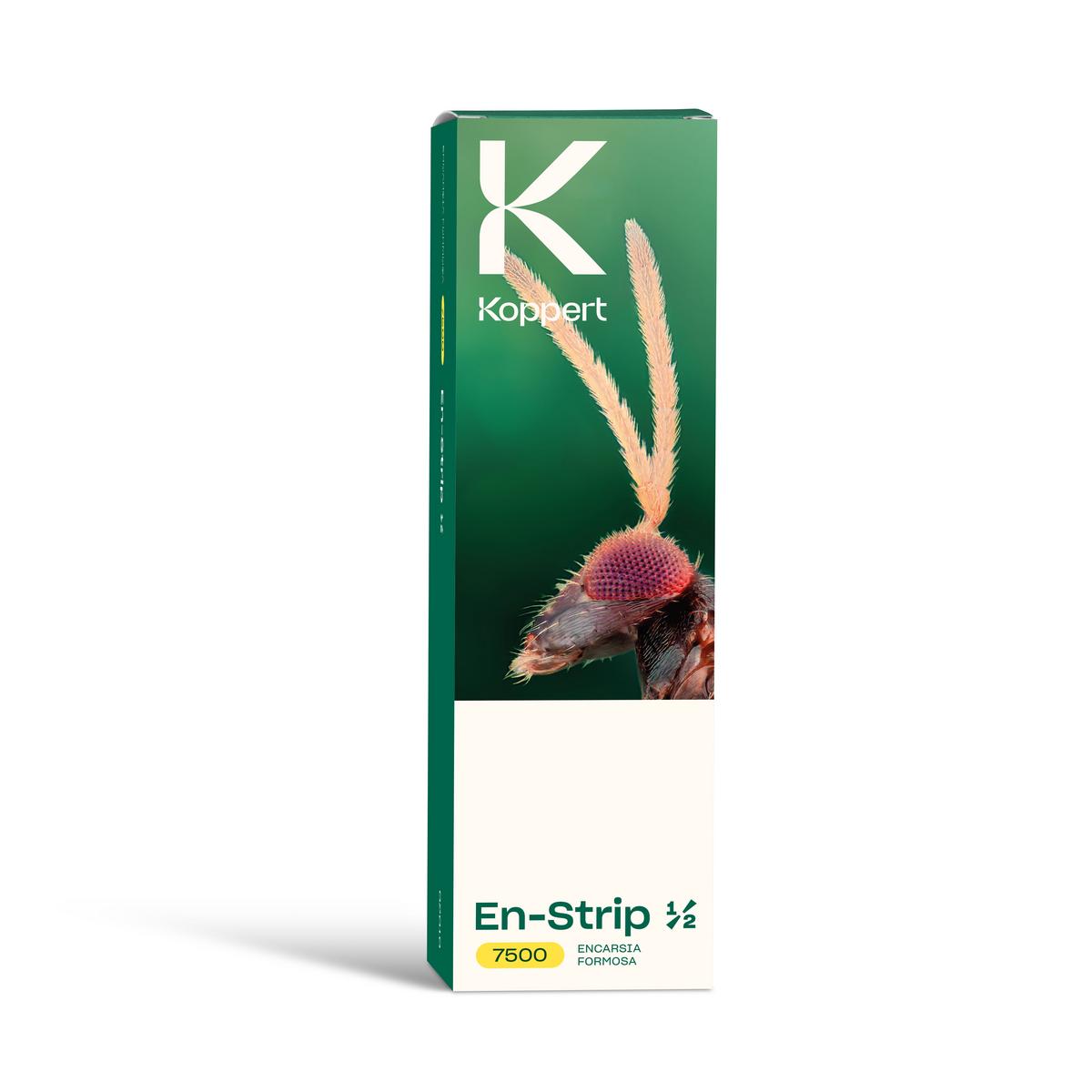
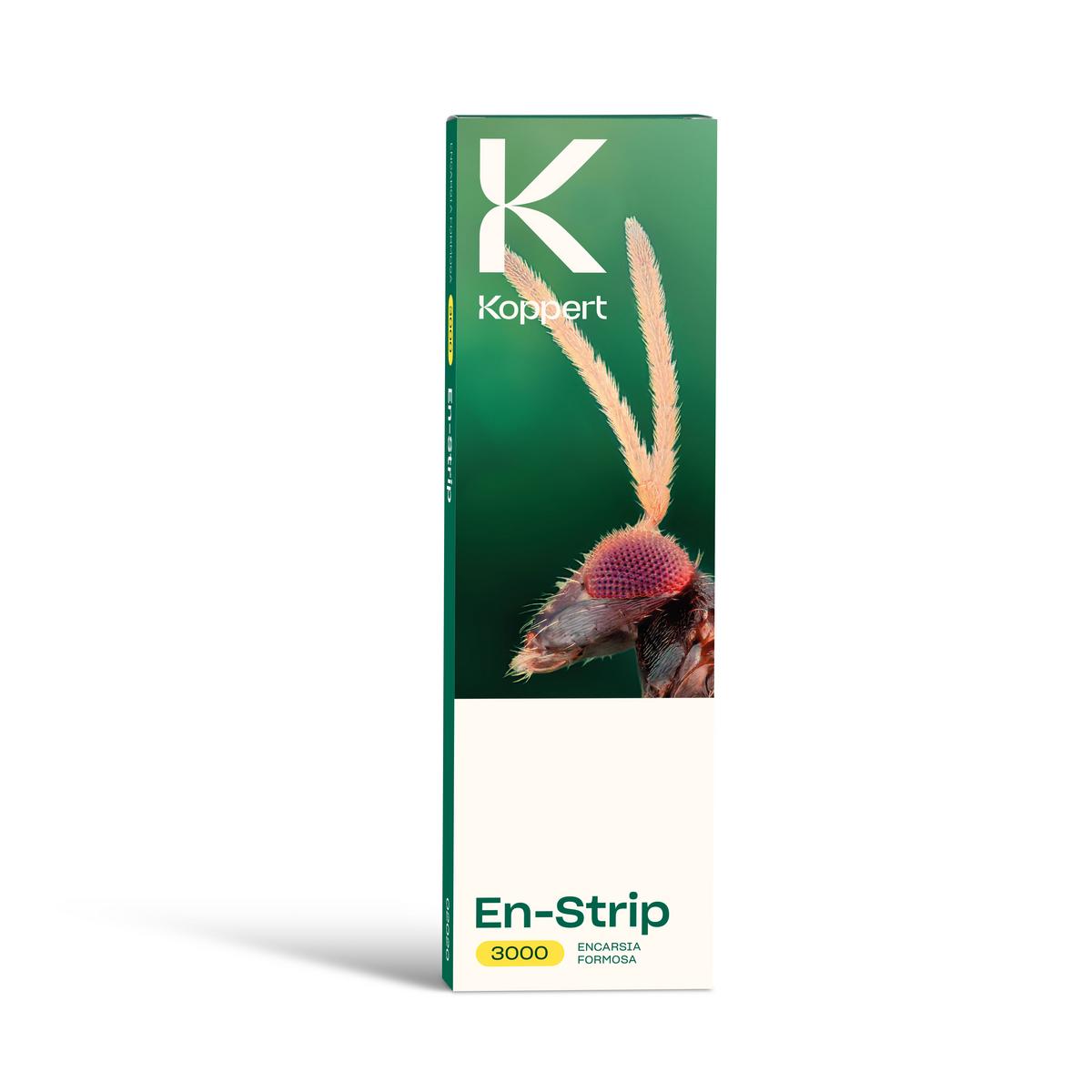
En-strip 7500 product photo

Monitoring & Follow-up

Visual checks: After 14-21 days from the first release, inspect the underside of leaves to determine if additional releases are required. Specifically look for adults and parasitized whitefly pupae.

Supplemental releases: If whitefly count remains high or increases, consider additional releases or review your IPM plan for gaps (e.g., residual pesticide effects, low humidity zones, new pest introduction).

Record‑keeping: Track release dates, environmental conditions, pest levels and predator observations to refine future programs.

What to Expect After Release:

  • First week: Adult wasps begin parasitizing whiteflies.
  • 2-3 weeks: Whitefly mummies become visible, indicating successful parasitism.
  • Ongoing: New adult wasps emerge from mummies, continuing whitefly control across the crop.

Because parasitic wasps work biologically, control is progressive, not instant. Monitoring whitefly levels and mummy formation is the best way to track success.

Tips for Growers

  • Introduce Encarsia formosa early or preventatively for best suppression
  • Focus releases 75cm under the plant heads where whitefly larvae is present
  • Combine monitoring (sticky traps, leaf counts) with releases
  • Avoid disruptive pesticides during and just after releases
  • Maintain good greenhouse hygiene to reduce pest reservoirs

A: Parasitized whiteflies (mummies) should be visible within 14–21 days, depending on temperature, crop, and whitefly pressure.

A: Yes. Encarsia formosa works well alongside other biocontrol agents such as predatory mites, predatory bugs, and other parasitoids when used in an IPM context.

A: No. Adults do not feed on whiteflies. They rely on nectar, honeydew, or water for energy while searching for hosts to parasitize.

A: Use sticky cards to track whitefly adult numbers and leaf inspections to count mummies. A decline in live larvae/pupae and an increase in mummies indicate parasitoid success.