Dalotia coriaria

Green icon of a mite on a green background

What is Dalotia coriaria

Dalotia coriaria (formerly Atheta coriaria) is a soil-dwelling predatory beetle widely used in biological pest management to control fungus gnat larvae, shore fly larvae, and other soil-dwelling pests like thrips pupae. It is especially effective in greenhouse crops, propagation areas, and container-grown plants where pests develop in the growing media. A common name for this predator is the Rove Beetle.

Both adults and larvae are active predators that hunt continuously in the substrate, providing ongoing suppression of pest populations without chemical residues.

Here’s What They Look Like at Different Stages of Their Life:

Understanding the life stages helps growers recognize predator presence and activity in the crop:

  • Egg: Eggs are laid in the growing medium and are extremely small and difficult to see with the naked eye.
  • Larva: Larvae are slender, cream-colored, and resemble small beetle grubs. This stage actively feeds on pest larvae in the substrate.
  • Pupa: Pupation occurs in the growing media. The beetle is inactive during this stage and remains hidden from view. They are covered by particles of the growing medium held together by silken strands.
  • Adult: Adults are small (about 3–4 mm), dark brown beetles with elongated bodies. They move quickly across the soil surface and into cracks, drainage holes, and organic debris when disturbed.

Why Growers Love It:

  • Actively hunts pests in the growing media
  • Targets fungus gnat and shore fly larvae before adults emerge
  • Works day and night with continuous feeding
  • Complements other biological controls and IPM programs
  • No chemical residues or re-entry restrictions
an brown beetle with wings on coco coir in the soil
Atheta pupae under a microscope with soil
an atheta beetle on top of soil
a beetle larvae on a green leaf

When to use Dalotia coriaria

Timing is critical to achieving success with predatory beetles. They perform best when introduced before pests reach outbreak levels.

Preventive Use:

  • Introduce Dalotia coriaria in propagation areas, where there are young plants.
  • Apply in high risk crops prior to any signs of fungus gnats, shore flies, and other soil pests.

Curative Use:

  • Deploy during times of high fungus gnat or shore fly infestations.
  • Multiple releases may be required if pest pressure is high or crop is mature and dense.

Environmental Conditions:

  • Dalotia coriaria performs best at an average greenhouse temperature of 25°C/77°F.

Note: Monitoring is essential. Inspect the soil weekly to determine if additional releases are required.

How to release Dalotia coriaria

Proper release techniques ensure that Dalotia coriaria establish quickly and begin controlling pests effectively:

  1. Distribute the product: Gently spin the cylinder and place the predators on the substrate you would like to treat.
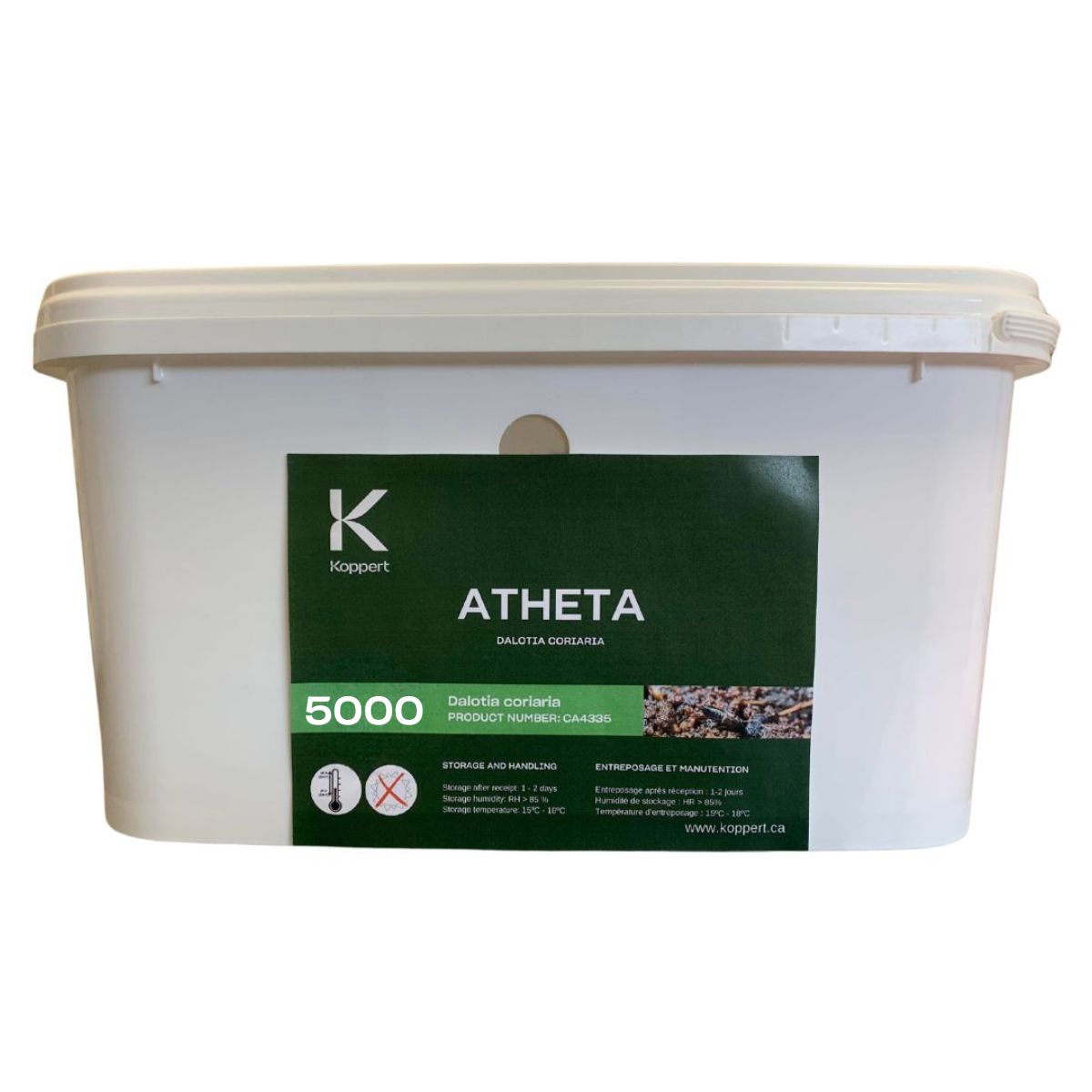
  2. Recommended density: 2-10/m2, but to ensure reproduction and mating, distribute the content of 1 package (1,000 beetles) into 10 to 20 small piles on the surface of the plant substrate (compost, coconut fibre, rock wool, etc.) Be sure to treat areas with wet, exposed areas of soil where fungus gnats and shore flies are likely to breed.
  3. Follow‑up releases: In curative situations or severe infestations, a second release after 21-28 days often improves establishment and control.
  4. Avoid interference: Do not release immediately before or after broad‑spectrum insecticide applications. If treatments are needed, choose only those compatible with beneficial insects.

Formulations & How to choose

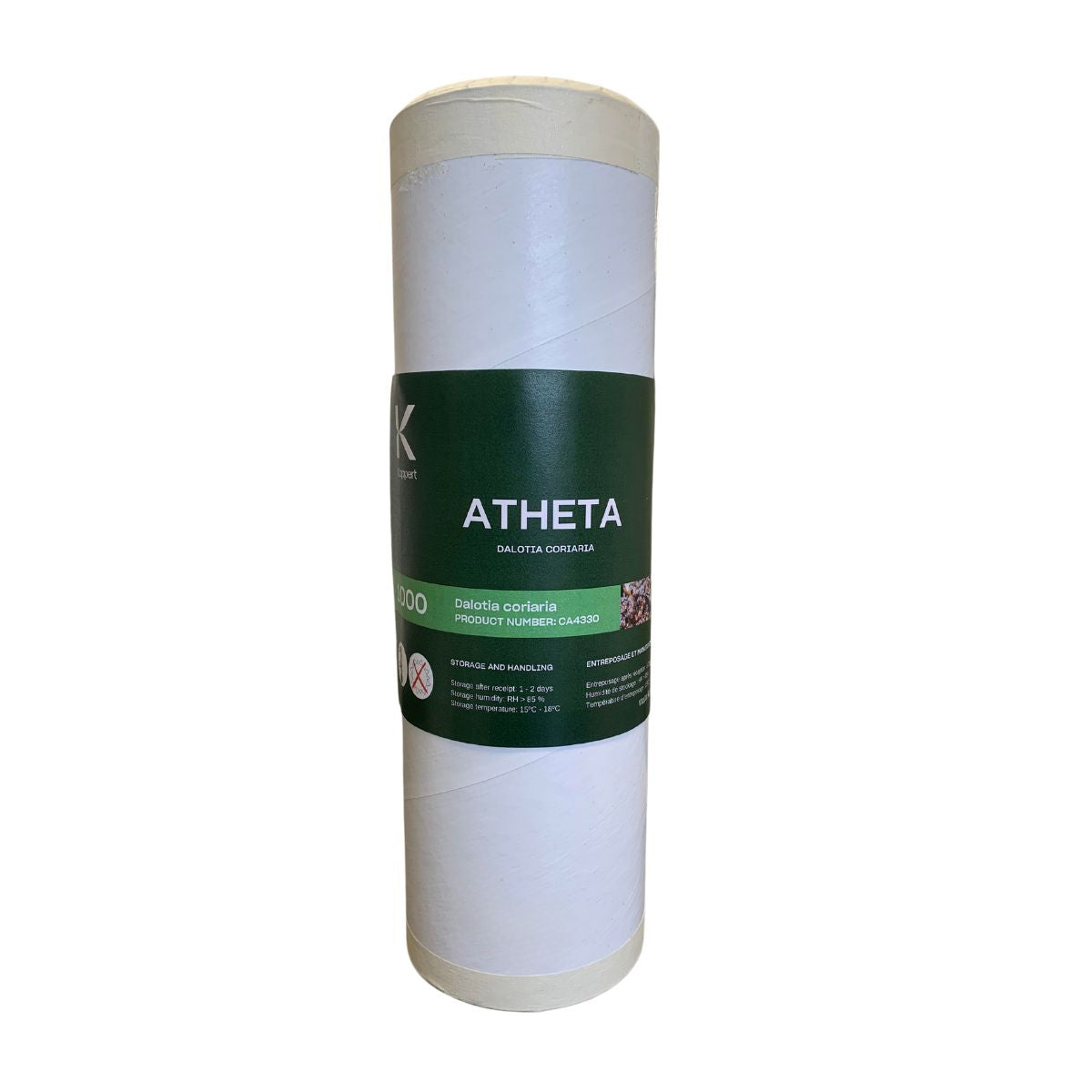
Cylinder/Bucket
  • Description:
    • Contains Dalotia coriaria in a soilless mix
  • Best use:
    • Use when you want to control the amount of fungus gnats, shoreflies, and other soil dwelling pests in your indoor growing space.

Tips for Selecting Rate:

  • For dense crops, high pest pressure or curative use → choose a higher rate and repeat releases, monthly (every 21-28 days).
  • For preventive use in low‑pressure crops → choose a lower preventative rate, and watch for product establishment.
  • Always match release strategy to crop size, foliage density, pest risk, and environment.
 
A white cardboard cylinder with a label that includes the text 'ATHETA'

Monitoring & Follow-up

Visual checks: Inspect substrate for fungus gnat larvae, shore fly larvae, and Dalotia coriaria activity (eggs, larvae, adults).

Supplemental releases: If soil pest counts remain high or increases, consider additional releases or review your IPM plan for gaps (e.g., residual pesticide effects, low humidity zones, new pest introduction).
Record‑keeping: Track release dates, environmental conditions, pest levels and predator observations to refine future programs.

What to Expect After Release:

  • Short‑term (0–7 days): Predators become active, dispersing, laying eggs (adults) and beginning to search for prey.
  • Mid‑term (1–3 weeks): Larvae and adults will feed on soil pests. A decline in the pest infestation should become noticeable.
  • Long‑term: As predators, these beetles deliver visible reductions in pest numbers over time with consistent applications. Repeat introductions help maintain control, especially in crops with continued pest pressure.

Tips for Growers

  • Introduce early for best results
  • Focus applications where moisture and organic matter are present
  • Use repeated releases in high-pressure situations
  • Combine with cultural practices such as good drainage and sanitation
  • Monitor fungus gnat and shore fly activity with sticky cards to track progress

Adults have wings but prefer to run and hide in the substrate. They are unlikely to leave the crop area.

They are fast-moving and soil-dwelling, so they are rarely seen unless disturbed.

Adults can live several weeks to months, depending on temperature and food availability.

Yes. Dalotia coriaria does not harm plants, people, or beneficial insects.