Phytoseiulus persimilis

Green icon of a mite on a green background

What is Phytoseiulus persimilis

Phytoseiulus persimilis is one of the most widely used biological control agents for two-spotted spider mites (Tetranychus urticae). This highly specialized predatory mite actively hunts spider mites and can rapidly reduce outbreaks when introduced in an infestation.

Unlike generalist predatory mites, Phytoseiulus persimilis feeds almost exclusively on spider mites and their eggs. Because of this specialization, it is extremely effective at eliminating spider mite hotspots in greenhouse crops, ornamentals, vegetables, berries, and indoor plants.

When prey is abundant, populations of P. persimilis can build quickly and suppress spider mites before severe crop damage occurs.

Here’s what they look like at different stages of their life:

Like other predatory mites, Phytoseiulus persimilis develops through five stages: egg, larva, protonymph, deutonymph, and adult.

  • Eggs: Eggs are oval and transparent with a light pink tint when first laid. They are usually deposited near spider mite colonies or within webbing, so that newly hatched predators can immediately locate prey. These eggs are typically about twice the size of spider mite eggs.
  • Larvae: The larval stage has six legs and is pale in color. Larvae do not feed and remain relatively inactive until they molt into the next stage.
  • Nymphs: After molting, the mite enters the protonymph and deutonymph stages. These eight-legged stages actively hunt spider mites and consume eggs, larvae, and immature spider mites. They resemble smaller versions of the adults but are lighter in color.
  • Adults: Adult Phytoseiulus persimilis mites are bright orange to red and about 0.5–0.6 mm long. They have long legs and move quickly across leaves while searching for prey. Females are slightly larger than males and are responsible for laying the next generation of eggs.

Behavior:

  • Adults and nymphs are active hunters, patrolling the underside of leaves and near mite colonies.
  • Because of their color and speed, adults are often easier to spot than other predatory mites when using a hand lens.

Why growers love it:

  • Specialist predator of spider mites
  • Extremely fast reproduction and population growth
  • Highly effective at eliminating spider mite hotspots
  • Moves easily through spider mite webbing
  • Compatible with many IPM programs
  • Safe for crops, people, and the environment
Slideshow Image 1
Phytoseiulus persimilis
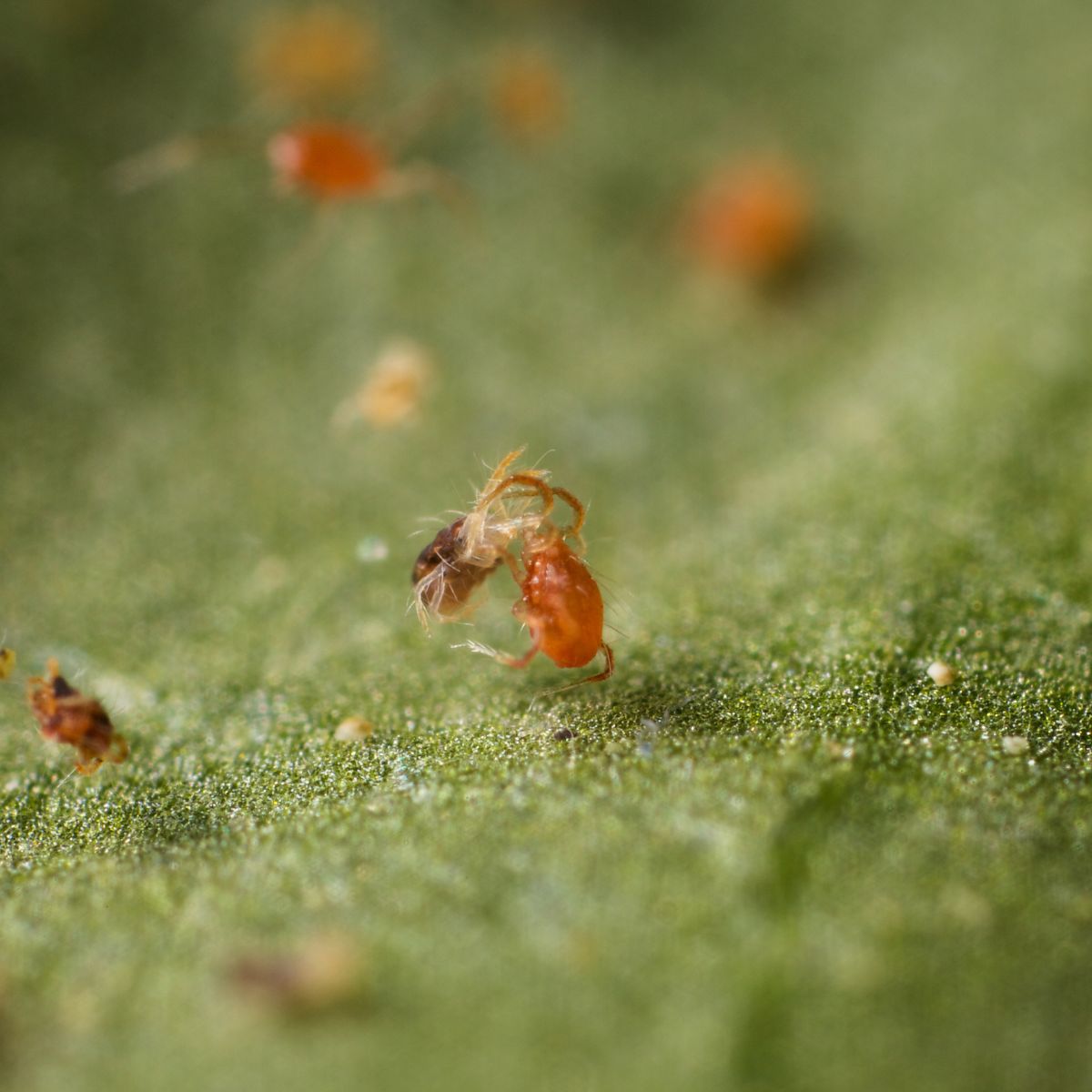
Spidex fighting with a two spotted spider mite
Slideshow Image 4

When to use Phytoseiulus persimilis

Timing is critical to achieving success with predatory mites. This predatory mite works best when spider mites are already present but still at manageable levels.

Preventive Use:

  • Ideal to introduce early in the crop cycle when spider mites are just starting to appear (e.g., in high-temperature, low-humidity conditions).
  • Useful in crops with dense canopy or webbing risk, where early predator establishment gives you an advantage.

Curative Use:

  • At the first signs of spider mite activity. E.g., eggs under leaf surface, fine webbing, early leaf stippling.
  • When a rapid knockdown of spider mites is needed.

Environmental Conditions:

  • 15-25°C is acceptable, with optimum closer to the middle of that range.
  • Needs relative humidity above ~70% for best performance.
  • Prey consumption decreases at temperatures above 30°C.
  • Above 35°C,Phytoseiulus persimilis stops feeding altogether.

Note: Monitoring is essential. Inspect leaves, flowers, and fruit clusters weekly to determine if additional releases are required.

How to release Phytoseiulus persimilis

Proper release techniques ensure the mites establish quickly and begin controlling pests effectively:

  1. Assess the crop (Curative): Identify areas with pest hotspots for targeted sachet or bottle releases.
  2. Even distribution (Preventative): Distribute product, bottle or sachets, evenly across the canopy, focusing on leaves, flowers, and fruit clusters where pests feed.
  3. Avoid chemical interference: Do not release immediately before or after broad-spectrum pesticide applications. If pesticides are necessary, choose products compatible with beneficial mites.
  4. Environmental management: Maintain proper growing conditions to maximize mite survival.

For best results, releases should be integrated into a broader IPM program that includes monitoring, sanitation, and complementary beneficials.

Formulations & How to choose

Bottle Red
  • Description:
    • Contains red persimilis in carrier material for easy scattering
  • Best use:
    • Weekly or bi-weekly repeat releases; Use when aggressive spider mite control is needed and you want to drastically increase the amount of predatory mites in your growing space.
Bottle Vital
  • Description:
    • Contains white persimilis in carrier material for easy scattering
  • Best use:
    • Weekly or bi-weekly repeat releases; Use when a spider mite infestation is just found with little webbing and you want to drastically increase the amount of predatory mites in your growing space.
Vital Plus
  • Description:
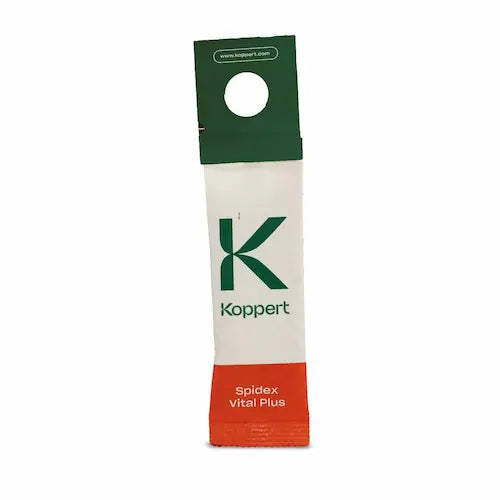
    • Paper sachet
  • Best use:
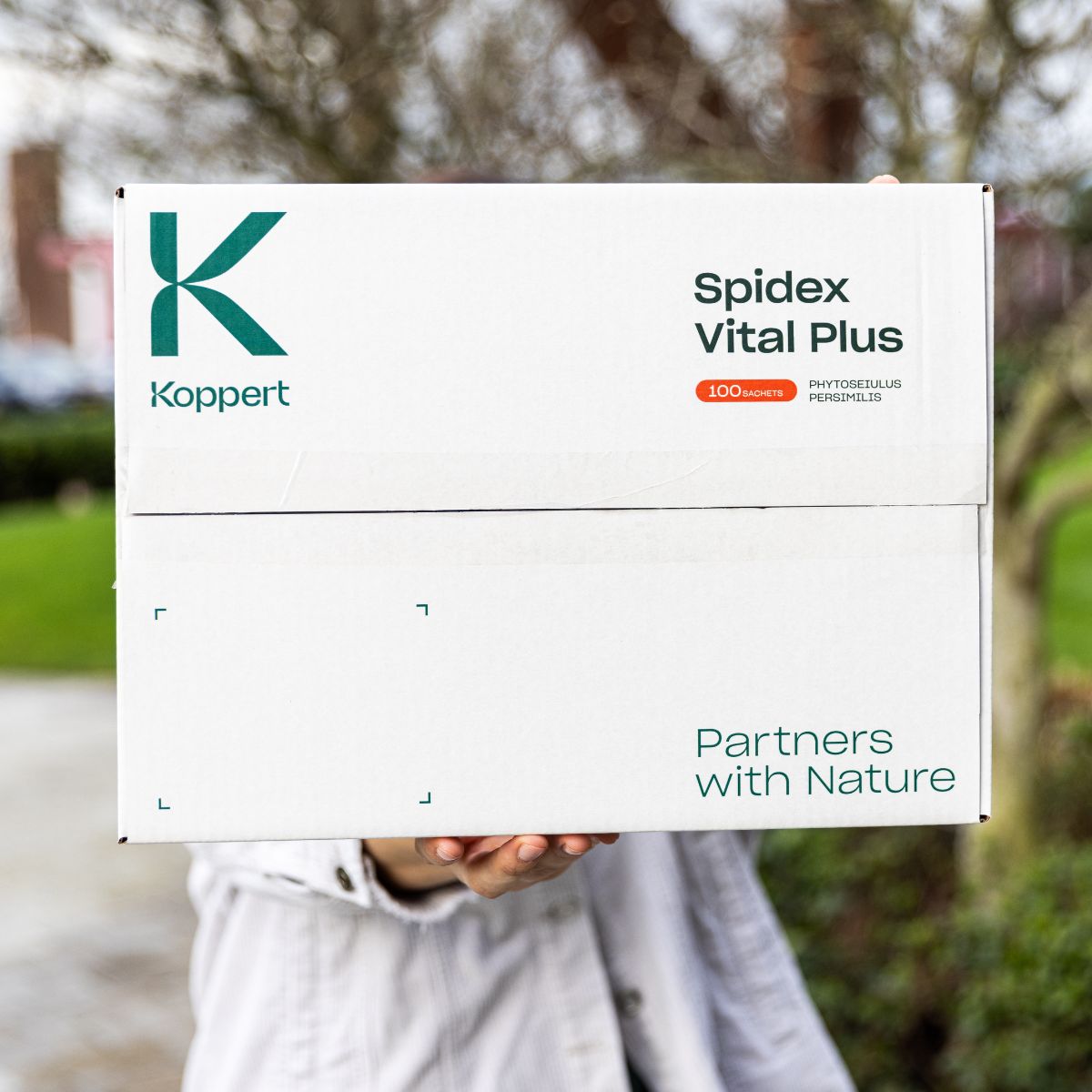
    • High humidity growing spaces above 70%; no overhead watering; Use when a spider mite infestation is just found with little webbing and you want a slow release sachet.
Boost
  • Description:
    • Industrial compostable sachets
  • Best use:
    • Low humidity growing spaces below 70%; overhead watering, outdoors; Use when aggressive spider mite control is needed and you want a clean release method.

Tips for each formulation:

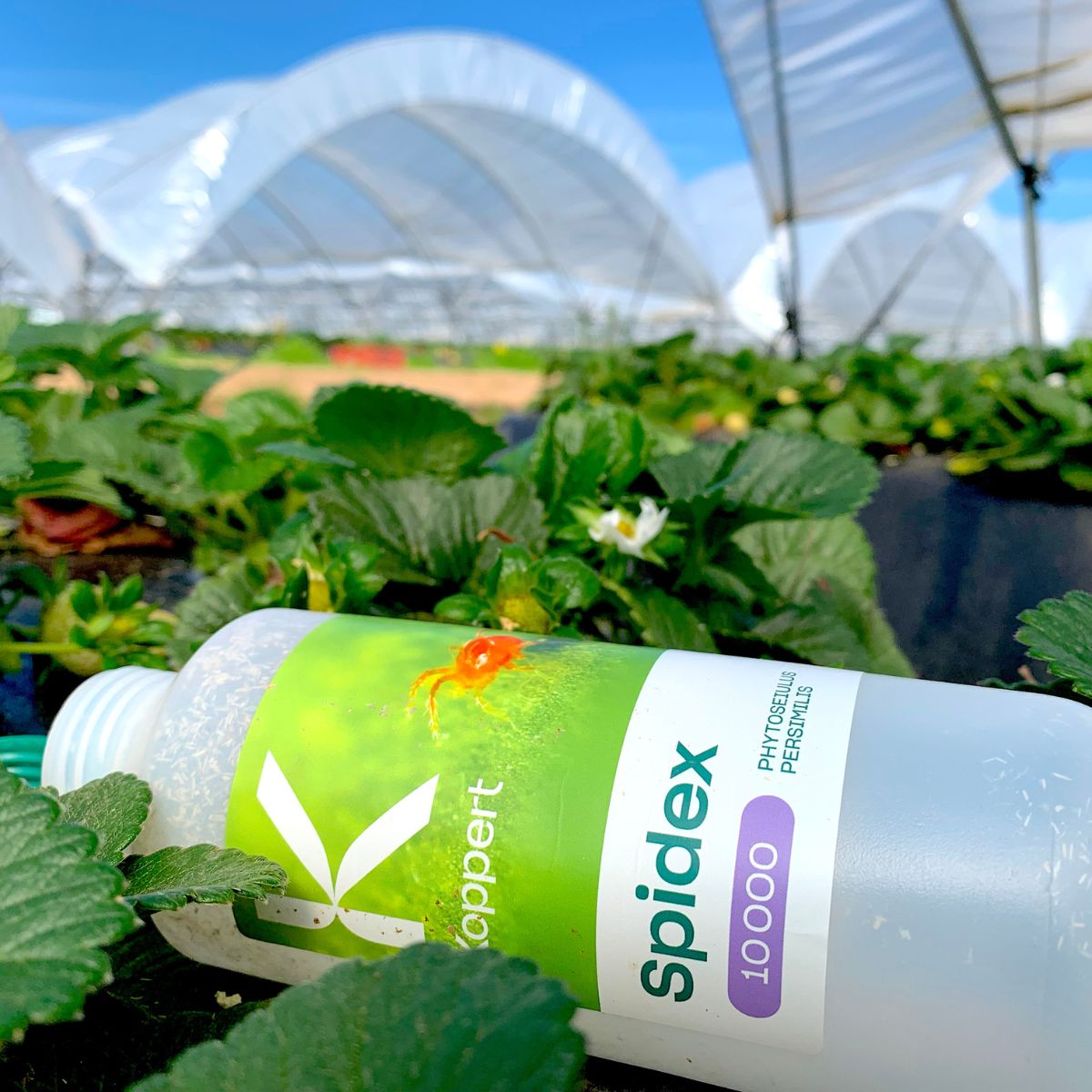
  • Bottle: Shake gently before distributing. Apply directly to leaves, flowers, and fruit clusters.
  • Boost/Plus: Hang sachets throughout the canopy; repeat every 2-weeks

Selecting the right formulation depends on crop, growing space, pest pressure, and your IPM strategy. Preventive programs and low-humidity growing spaces often benefit from sachet formulations, while high-humidity greenhouses with high pest pressure will only require Bottle releases.

 
A product packaging labeled 'Spidex Boost' by Koppert, primarily in orange and white colors with text and branding.
 
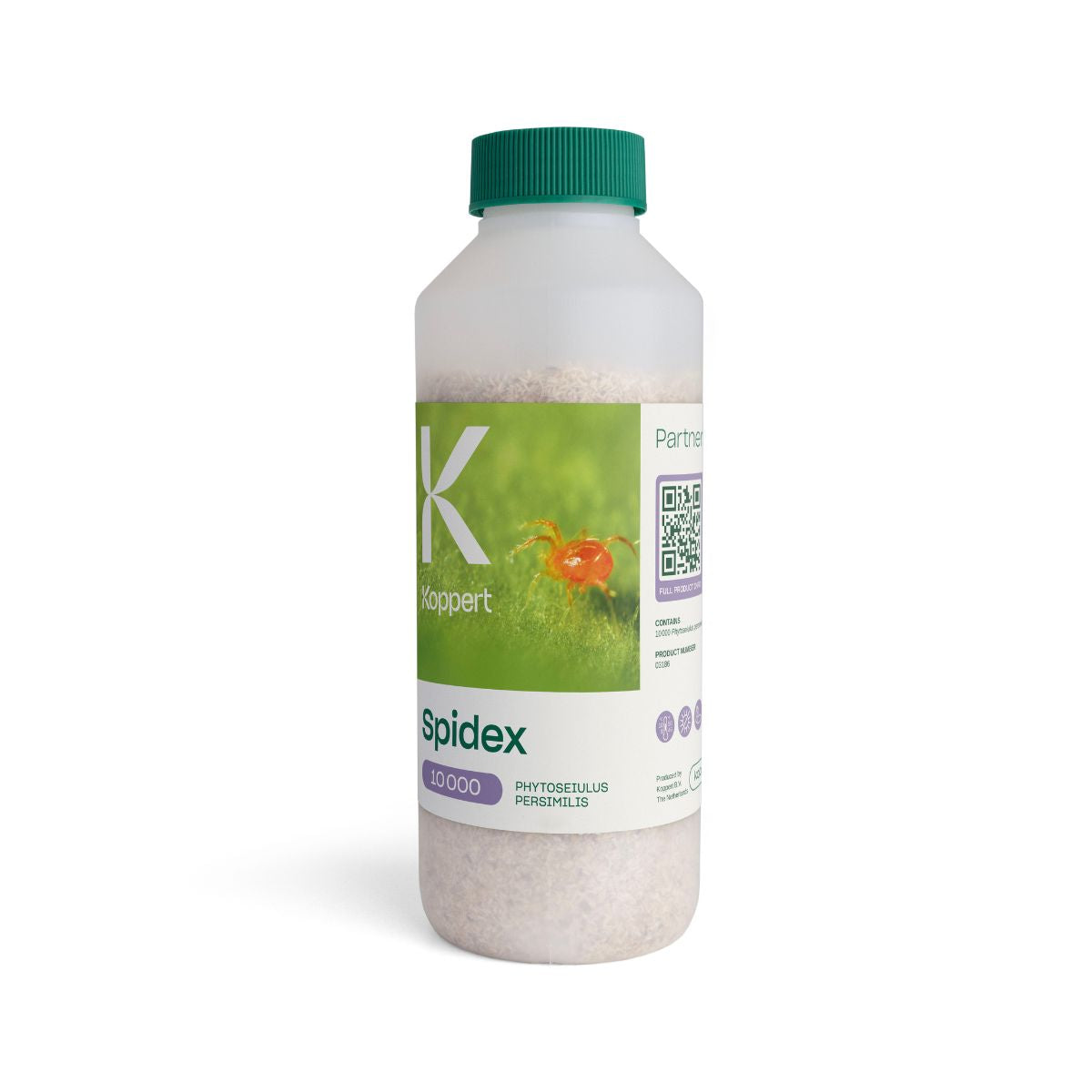
A Spidex 10,000 bottle
 
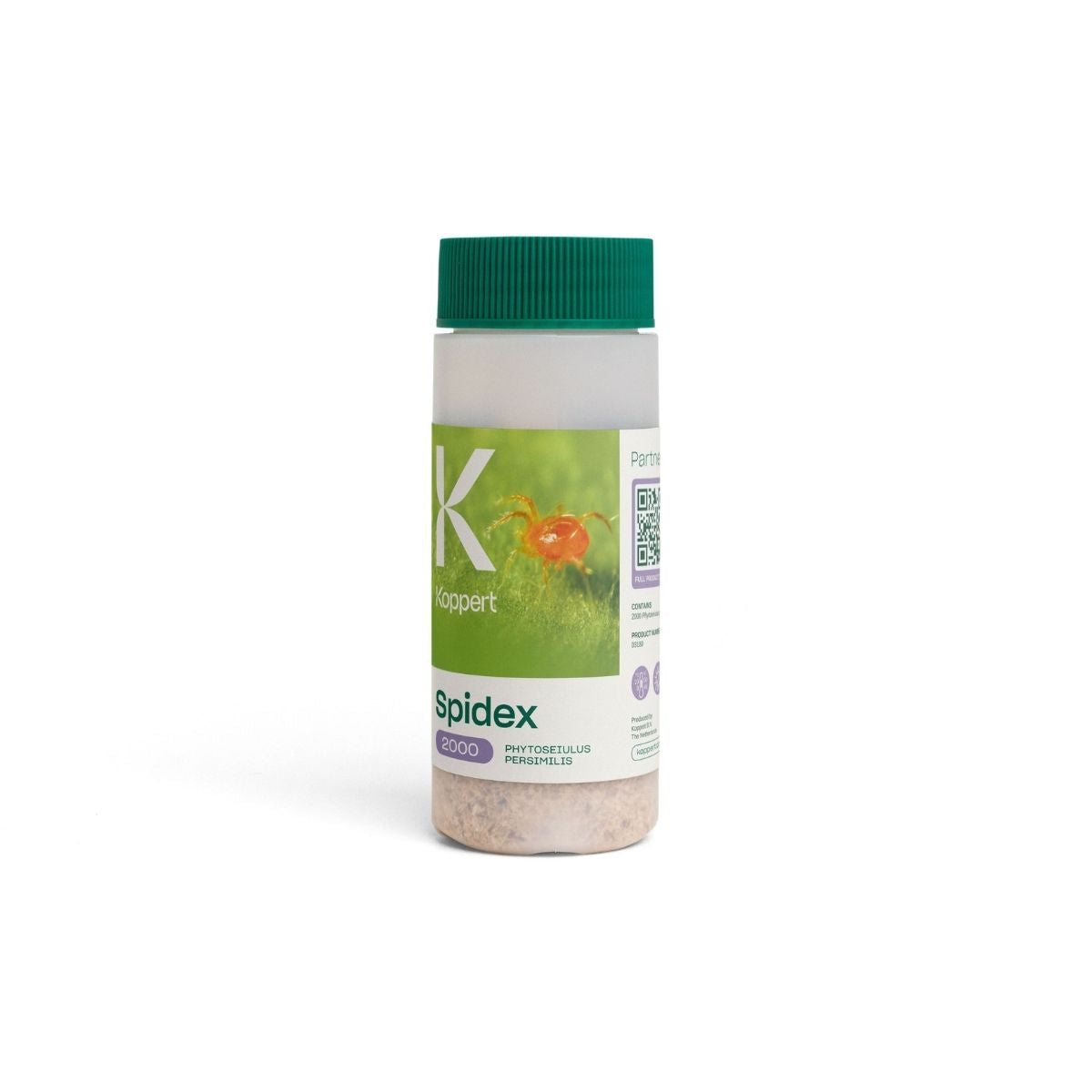
Small 100ml bottle of spidex-vital 2000
 
orange and white sachet with a green hook on a white background

Monitoring & Follow-up

Tracking both predator and pest populations ensures Phytoseiulus persimilis delivers consistent results:

  • Weekly inspections: Inspect leaves, especially undersides and webbing, weekly for spider mite activity and predatory mite presence.
  • Supplemental releases: If pest populations are high or mites have not fully established, follow up with additional releases.
  • Records: Keep records of release dates, pest levels, predator observations to refine future strategies.

A well-maintained predator population can maintain pest control long-term, reducing the need for chemical interventions.

Tips for Growers

  • Release as soon as spider mites are detected.
  • Focus introductions near infestation hotspots.
  • Maintain moderate humidity levels for best survival.
  • Avoid pesticide applications that harm predatory mites.
  • Monitor spider mite populations regularly to guide additional releases.

A: Mites begin hunting immediately. Pest numbers usually drop within 2-4 weeks and after multiple releases, depending on crop size, product type, and initial infestation.

A: No. Phytoseiulus persimilis is a specialist predator and cannot survive long without spider mite prey.

In preventive and curative programs, you need to keep applying weekly or bi-weekly, depending on product, pest infestation, and crop type, until crop end.

A: They perform best between 15–25 °C and prefer relatively humid conditions above 70% humidity.