Feltiella acarisuga

Green icon of a mite on a green background

What is Feltiella acarisuga

Feltiella acarisuga is a beneficial predatory gall midge widely used in biological pest control to suppress spider mite populations in protected crops such as tomatoes, peppers, cucumbers, ornamentals, and berries. It works especially well in localized “hotspots” where spider mites are already present and reproducing rapidly.

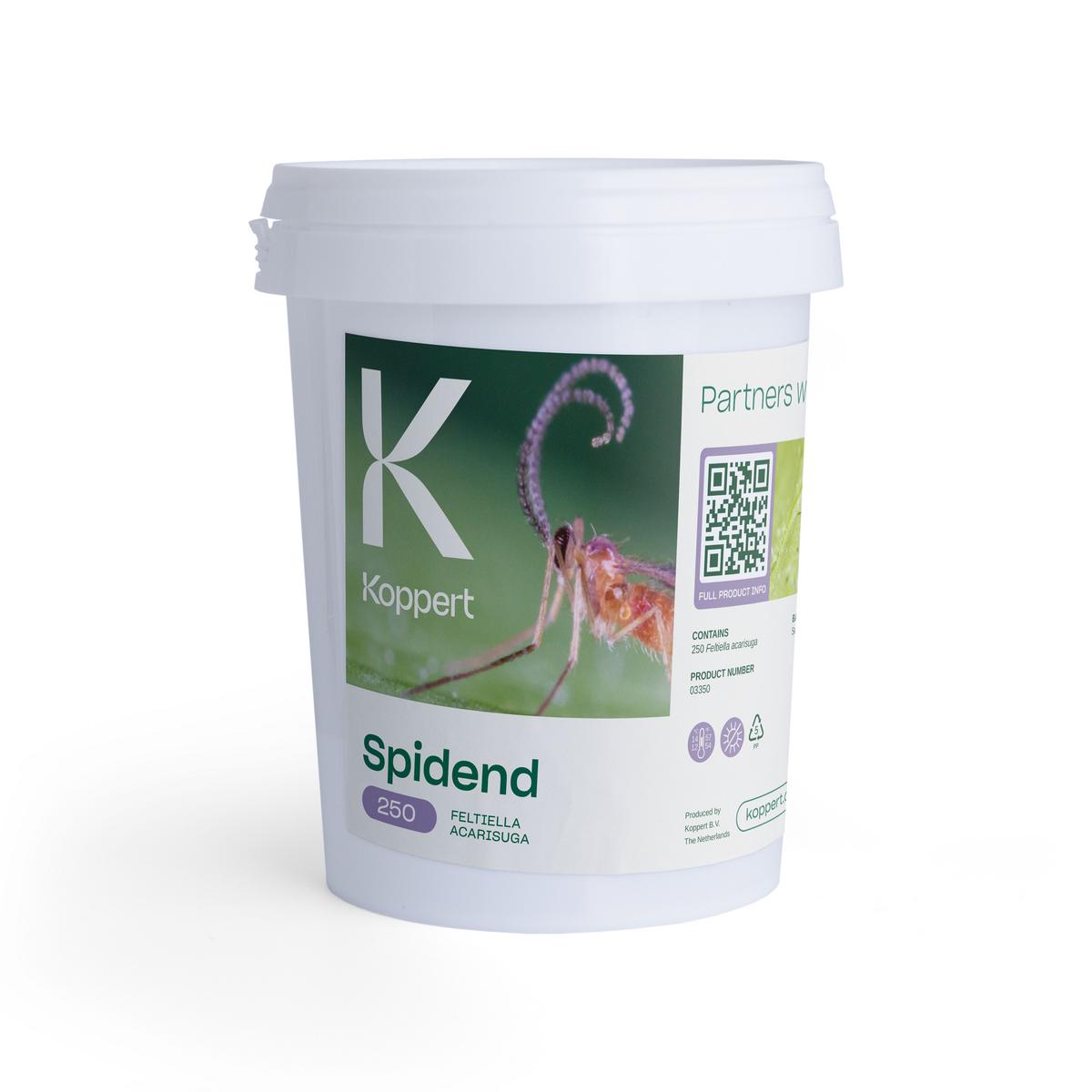
Available from Koppert under the product name Spidend, Feltiella acarisuga is an important biological control agent in Integrated Pest Management (IPM) programs that reduces reliance on chemical pesticides while maintaining crop health and quality.

Here’s What They Look Like at Different Stages of Their Life:

Growers often do not see Feltiella acarisuga adults in the crop, so understanding the life stages helps with monitoring and timing:

  • Eggs: Females lay eggs on leaves near mite colonie sand in spider mite webs. The eggs are clear to light yellow and slightly larger than spider mite eggs.
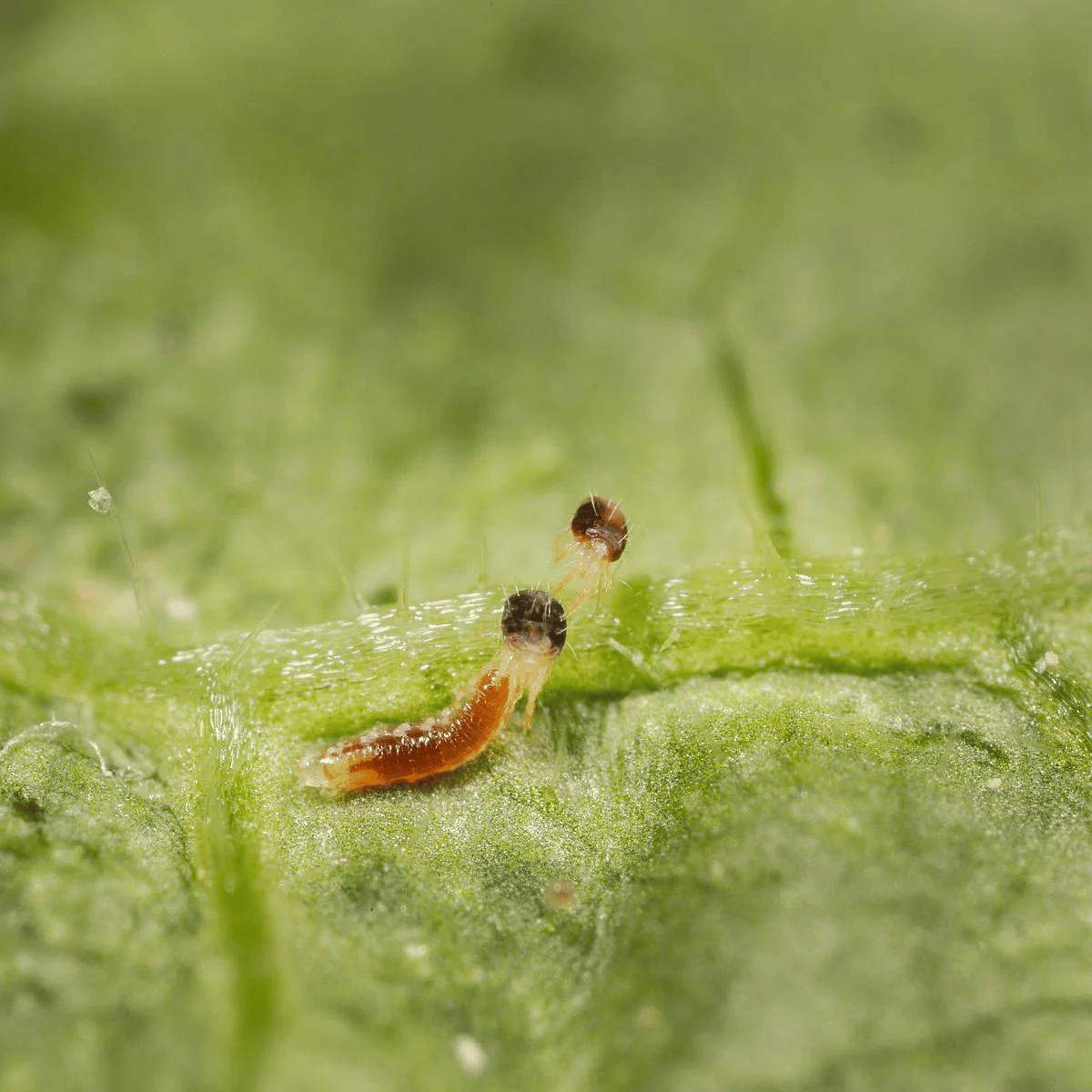
  • Larvae: Newly hatched larvae are initially pale and become orange or red in color based on what they eat. Larvae are the predatory stage, immediately feeding on spider mite eggs, larvae, and adults. They immobilize prey with their mouthparts and suck out the contents.
  • Pupae: After feeding and developing, larvae spin a white cocoon near leaf veins and pupate inside. Pupae are often found in sheltered spots such as leaf crevices.
  • Adults: Adult gall midges emerge from pupae as small, delicate flies. Adults are not predatory. They require only water and sugar, focusing on locating spider mite colonies to lay eggs.

Why Growers Love It:

  • Larvae feed on all stages of spider mites.
  • Feeding intensity adapts to mite population size.
  • Complements predatory mites for broad mite suppression.
  • Offers a chemical-free option for spider mite control.
  • Adult midges can move through the crop to locate infestations.
Spidend feeding on a spider mite
Close-up of pupae on a green leaf
Small insect on a green leaf
Microscopic view of a biological sample on a black background

When to use Feltiella acarisuga

Timing is critical to achieving success with gall midges. They perform best when introduced after pests reach outbreak levels. This is because the number of eggs laid per female depends on the amount of food on the plant that can be consumed by the larvae.

Preventive use:

  • Do not use for preventative use.

Curative use:

  • Effective when a large number of spider mites are present.
  • Multiple releases will be required if pest pressure is high or crop is mature and dense.

Environmental Conditions:

  • Performs best between 20–27°C, with activity decreasing below 12°C.
  • Eggs do not hatch above 35°C and development ceases below 8°C
  • High relative humidity (>80%) enhances performance.
  • Suitable for vegetables, ornamentals, herbs, and indoor plant production.

Note: Monitoring is essential. After 14-21 days from the first release, inspect leaves, flowers, and fruit clusters to determine if additional releases are required. Specifically look for larvae.

How to release Feltiella acarisuga

Proper release techniques ensure Feltiella acarisuga establish quickly and begin controlling pests effectively:

  1. Timing the release: Introduce Spidend when a hot spot is found in your growing space. Use within 1-2 days after receipt.
  2. Placement: Make a hole in the lid and place the bucket on rockwool slabs or soil near spider mite hotspots. Leave containers in place for at least two weeks to allow adults to emerge and lay eggs.
  3. Dispersal: Once adults emerge, they will fly out and begin dispersing through the crop.
  4. Release rate: Rates typically range from 0.25-25 midges per m² per release, adjusted based on crop, climate, and aphid pressure.
  5. Repeat releases: Weekly or bi-weekly introductions are recommended until spider mite populations are under control.

Formulations & How to choose

Bucket
  • Description:
    • Contains pupae with wood wool and dried cucumber leaves.
  • Best use:
    • Use when you want to control a spider mite infestation in your growing space.

Tips for Selecting Rate:

  • For dense crops, high pest pressure or curative use → choose a higher rate and repeat releases, weekly or bi-weekly (every 7-14 days).
  • For small hot spots in low‑pressure crops → choose a lower rate, and watch for product establishment.
  • Always match release strategy to crop size, foliage density, pest risk, and environment.
 
Spidend 250 in 550ml plastic cup

Monitoring & Follow-up

Visual checks: After 14-21 days from the first release, inspect leaves, flowers, and fruit clusters to determine if additional releases are required. Specifically look for Feltiella acarisuga larvae.

Supplemental releases: If spider mite count remains high or increases, consider additional releases or review your IPM plan for gaps (e.g., residual pesticide effects, low humidity zones, new pest introduction).

Record‑keeping: Track release dates, environmental conditions, pest levels and predator observations to refine future programs.

What to Expect After Release:

  • First week: Adult females will emerge from the container and begin laying eggs in spider mite infestations.
  • 2-3 weeks: Feltiella acarisuga larvae will begin showing up in spider mite infestations.
  • Visual Suppression: After 21 days, with multiple weekly or bi-weekly installments, the spider mite population will begin to decrease.

Tips for Growers

  • Ensure conditions meet temperature and humidity recommendations.
  • Repeat releases weekly or bi-weekly until aphid suppression is achieved.
  • Avoid heavy pesticide use near release areas as chemicals can harm midges.
  • Combine with predatory mites for comprehensive spider mite management.

A: No. Adults do not prey on mites; they seek out colonies to lay eggs. The larvae are the predatory stage.

A: Larval feeding begins soon after egg hatch (typically within 1–2 weeks), and mite populations will begin to decline as larvae consume eggs and adults.

A: This predator is curative, not preventative. It requires an existing spider mite population to establish and reproduce. It is best used once mites are detected, particularly in localized hotspots.

A: Predatory mites provide background suppression, while Feltiella acarisuga excels in hotspot control.