Cryptolaemus montrouzieri

Green icon of a mite on a green background

What is Cryptolaemus montrouzieri

Cryptolaemus montrouzieri — often called the mealybug destroyer — is a predatory beetle used in biological pest management to control mealybugs and soft scale in indoor growing spaces and greenhouse crops. Adults and larvae are both active hunters that feed on mealybugs at all life stages, helping growers reduce pest pressure naturally without relying on chemical insecticides.

This species is part of the ladybird beetle family but is specialized for feeding on mealybugs, including citrus mealybug and long-tailed mealybug, making it a valuable ally in managing heavy infestations.

Here’s What They Look Like at Different Stages of Their Life:

Understanding the life stages helps growers recognize predator presence and activity in the crop:

  • Egg: Eggs are small and oval, typically laid near mealybug colonies on leaf surfaces or plant stems.
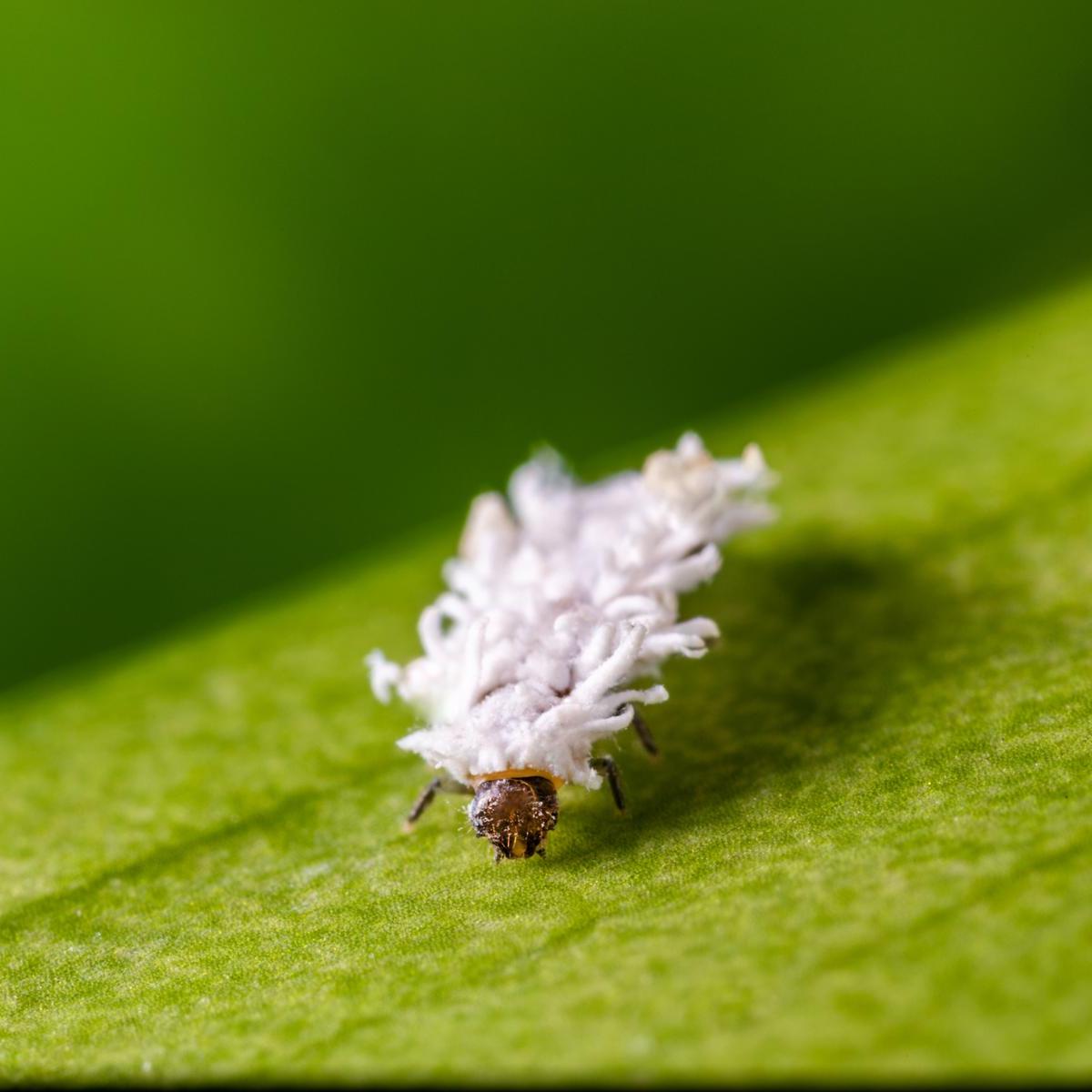
  • Larvae: They are the most voracious life stage. They are elongated and mimic mealybug larvae with their woolly filaments. Without these, they appear dark brown/black.
  • Pupae: After feeding and growth, larvae pupate in sheltered areas on plants or greenhouse materials. They are inactive during this stage before becoming adults.
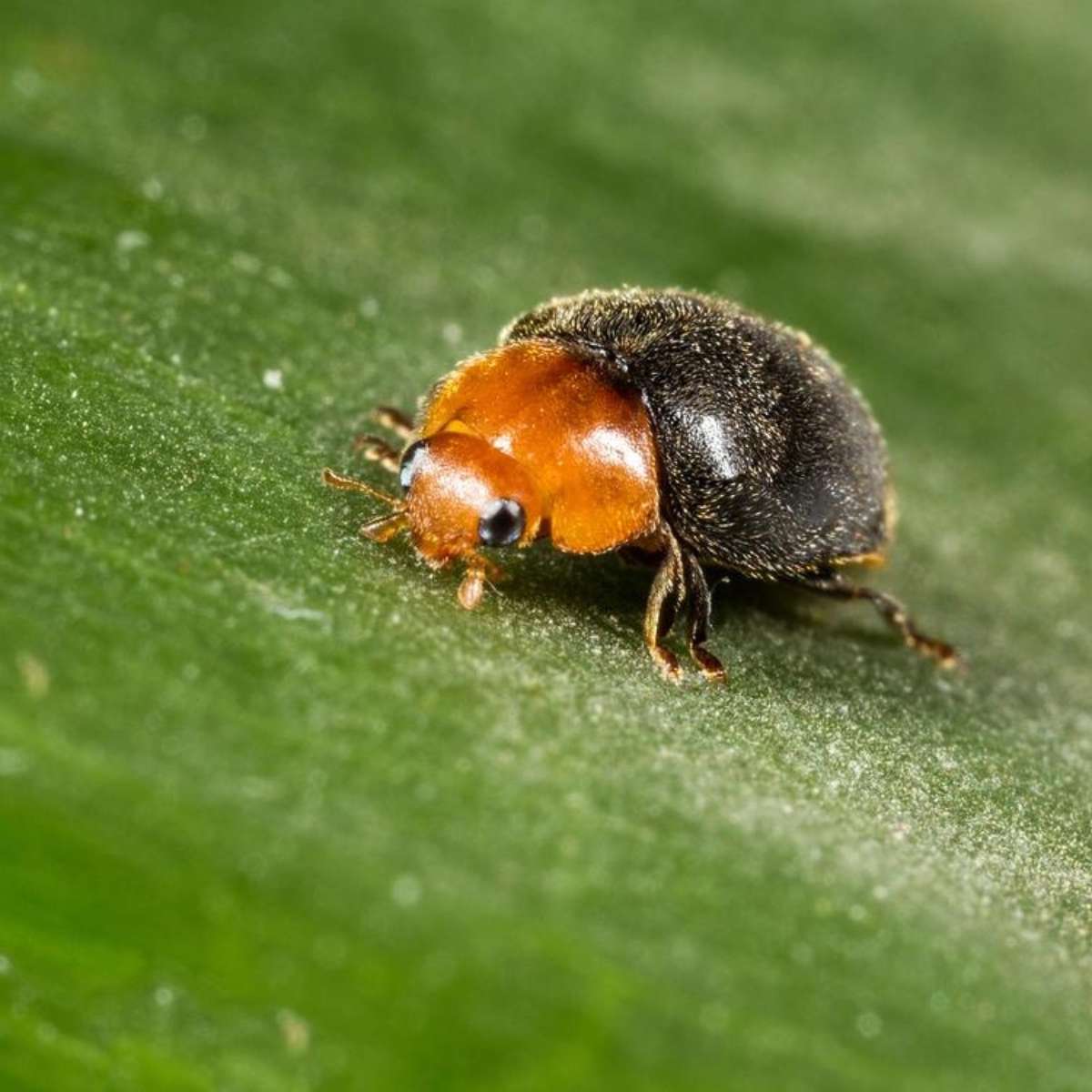
  • Adult: Adults are small beetles about ~4 mm long with dark brown to black bodies. They are strong fliers and search widely across plants for prey. Adults feed on mealybugs and are highly mobile predators.

Note: Both adults and larvae feed directly on mealybugs, which helps control populations quickly when the beetles are released into the crop.

Why Growers Love It:

  • Both larvae and adults feed on mealybugs, reducing populations effectively.
  • Adults can move widely to locate prey.
  • Works naturally alongside other biological controls.
  • While mealybugs are preferred, related pests can also be eaten, like soft scale.
  • Safe and residue-free for workers and crops.
Image of cryptobug-L insect: cryptolaemus montrouzieri on leaf
Close up of Cryptobug, Cryptolaemus montrouzieri
Small egg on a textured surface with blue lines
Insects on a branch with a blurred green background

When to use Cryptolaemus montrouzieri

Timing is critical to achieving success with predatory insects. They perform best when introduced before pests reach outbreak levels.

Preventive Use:

  • Introduce Cryptolaemus montrouzieri as soon as a mealybug or soft scale insect is found. Early use helps prevent large infestations.

Curative Use:

  • Deploy during times of high mealybug or soft scale infestations.
  • Multiple releases may be required if pest pressure is high or crop is mature and dense.

Environmental Conditions:

  • Most effective between 25–28 °C (68–82 °F). Activity slows at lower temperatures (< 16 °C).
  • Above 33°C their searching behaviour comes to a standstill, while below 16°C they slow down until activity ceases at temperatures below 9°C.
  • Adult ladybirds are good fliers and can disperse over a large area in search of prey.
  • Prefer to work during the day. They love the sun.
  • Avoid areas where recent broad‑spectrum insecticides were applied — such treatments may reduce performance of the predator.

Note: Monitoring is essential. Inspect leaves and stems, and any other plant crevices weekly to determine if additional releases are required. Remember the larvae perform mimicry, looking like the mealybug larvae.

How to release Cryptolaemus montrouzieri

Proper release techniques ensure the Cryptolaemus montrouzieri establish quickly and begin controlling pests effectively:

  1. Distribute the product: (Bottle) Gently spin and place the larvae on rock wool slabs, in Dibox boxes, or directly on leaves near mealybug hotspots. Evening releases often improve establishment. (Box) Open in the growing space, and sprinkle them evenly through the area. They will begin flying around immediately after placement.
  2. Recommended density: Introduce based on pest pressure. Cryptobug (adults): Typically 2–10 adults per m² per release in infested spots. Cryptobug-L (larvae): Often 5–40 larvae per m² per release, repeated at intervals until control is achieved.
  3. Follow‑up releases: In curative situations or severe infestations, a second release after 7–14 days often improves establishment and control.
  4. Avoid interference: Do not release immediately before or after broad‑spectrum insecticide applications. If treatments are needed, choose only those compatible with beneficial insects.

Formulations & How to choose

Bottle
  • Description:
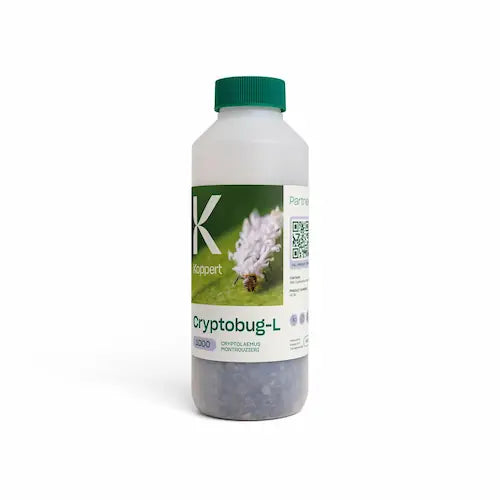
    • Contains Cryptolaemus montrouzieri larvae in buckwheat
  • Best use:
    • Use when you want to control the amount of mealybugs or soft-scale in your indoor growing space.
Box
  • Description:
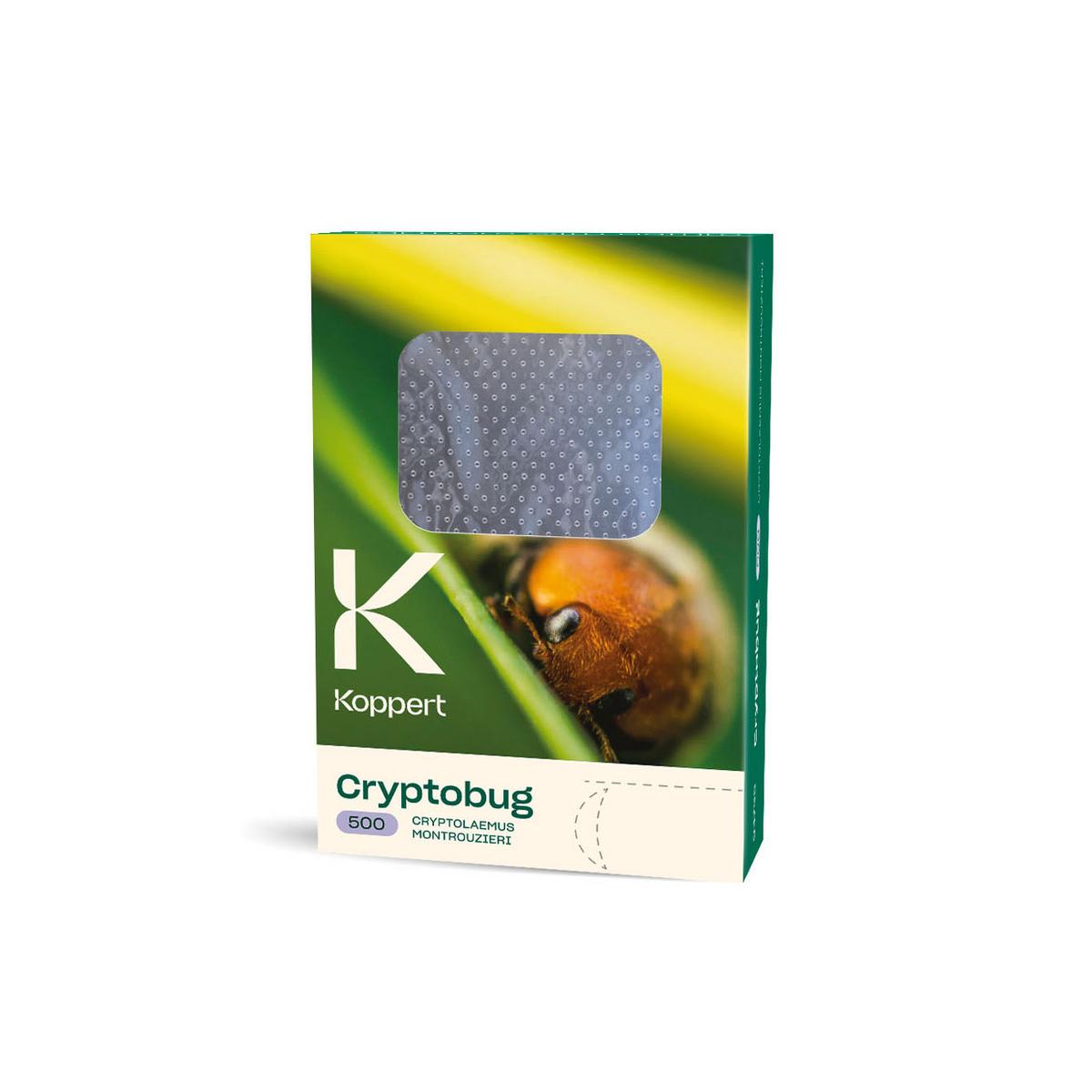
    • Cryptolaemus montrouzieri adults only. No carrier.
  • Best use:
    • When wanting to control mealybugs or soft-scale in atriums or greenhouses

Tips for Selecting Rate:

  • For dense crops, high pest pressure or curative use → choose a higher rate and repeat releases, weekly or bi-weekly (every 7-14 days).
  • For preventive use in low‑pressure crops → choose a lower preventative rate, and watch for product establishment.
  • Always match release strategy to crop size, foliage density, pest risk, and environment.
 
Small box of cryptobug 500 with mesh opening in front
 
Bottle of cryptobug on a white background

Monitoring & Follow-up

Visual checks: Inspect leaves and stems, and any other plant crevices for mealybugs or soft scale and Cryptolaemus montrouzieri activity (eggs, larvae, adults).

Supplemental releases: If thrips count remains high or increases, consider additional releases or review your IPM plan for gaps (e.g., residual pesticide effects, low humidity zones, new pest introduction).
Record‑keeping: Track release dates, environmental conditions, pest levels and predator observations to refine future programs.

What to Expect After Release:

  • Short‑term (0–7 days): Predators become active, dispersing, laying eggs (adults) and beginning to search for prey.
  • Mid‑term (1–3 weeks): Larvae and adults will feed on mealybugs, often starting with eggs and nymphs and moving to larger stages.
  • Long‑term: As predators, these beetles deliver visible reductions in mealybug numbers over time with consistent applications. Repeat introductions help maintain control, especially in crops with continued pest pressure.

Tips for Growers

  • Release at first signs of a mealybug or soft scale infestation or in hotspot areas.
  • Repeat releases weekly or bi-weekly during heavy infestations.
  • Ensure temperatures are adequate; below about 16 °C activity slows.
  • Combine with cultural controls (sanitation, pruning) for best results.

A: It targets all stages of many mealybug species, such as citrus and long-tailed mealybugs. It will also feed on soft scale.

A: Yes. Larvae and adults both consume mealybugs, with older stages eating all life stages.

A: Use the beetles as soon as possible, ideally within 1–2 days of receipt.

A: Most effective between about 25–28 °C, with reduced activity below ~16 °C.