Bacillus subtilis & Bacillus amyloliquefaciens

Green icon of a mite on a green background

What is Bacillus subtilis & Bacillus amyloliquefaciens

Bacillus subtilis and Bacillus amyloliquefaciens are beneficial bacteria widely used in modern horticulture to support plant health and growth. When formulated together like in Microflora PRO, they colonize plant root systems, improve nutrient availability, and help plants withstand environmental stresses while boosting overall vigor and productivity.

Unlike traditional chemical fertilizers or soil amendments, these microbes work in harmony with plants and soil biology, creating a more resilient root environment and promoting stronger, healthier growth.

Here’s What They Do:

Although you won’t see these bacteria with the naked eye, their activity has meaningful effects on your crop:

  • Root colonization: They establish themselves on plant root surfaces (the rhizosphere) and form a beneficial microbial layer that interacts directly with your plants.
  • Improved nutrient uptake: These microbes enhance the plant’s ability to absorb key nutrients like nitrogen (N), phosphorus (P), potassium (K), iron (Fe), calcium (Ca), and magnesium (Mg).
  • Phytohormone production: They help stimulate plant growth by contributing to the production of growth-supporting hormones such as auxins and gibberellins.
  • Stress resilience: Their presence can help plants cope with abiotic stress, such as salinity or poor soil conditions.

These benefits combine to strengthen root systems, boost plant robustness, and improve yield potential, especially when applied early in the crop cycle.

Why Growers Love It:

  • Enhances plant nutrient uptake and growth without chemicals.
  • Helps plants cope with environmental stress conditions.
  • Easy to integrate with fertilizers and other crop inputs.
  • Supports long-term root health and substrate biology.
  • Safe for people, plants, and beneficial organisms; a natural biological ally.
Close-up of roots with green fluorescence (Bacillus) on a black background
Close-up of white coral-like structures on a dark background
Root system of a plant held by gloved hands with a white background
Close-up of a textured surface with intricate patterns

When to use Bacillus subtilis & Bacillus amyloliquefaciens

Timing is critical to achieving success with Bacillus spp.

Preventative:

  • They perform best when introduced early in the crop cycle.
  • Apply during seedling stages, transplanting, or early vegetative growth so the bacteria can colonize roots as they develop.

Curative:

  • After the initial introduction, apply Microflora Pro throughout the growing season.
  • Repeat applications at a frequency of 14-28 days.
  • Keep the frequency of application every 14 days during periods of unfavorable conditions.
  • Unfavorable conditions include periods of stress, rapid growth, or nutrient demand.

Environmental Conditions:

  • Works in home grows, greenhouses, nurseries, hydroponics, outdoor fields, and ornamental crops.

Note: Because Bacillus subtilis and Bacillus amyloliquefaciens are living organisms, the earlier they are introduced, the more time they have to establish and deliver benefits.

How to release Bacillus subtilis & Bacillus amyloliquefaciens

Drench:

  • Dilution for small surface drench: Mix at a ration of 1-2:1000 (vol:vol)
  • Dosage per surface: Apply at a rate of 14-28 oz of concentrate per acre (1-2 L/Ha).
  • Fill the tank with roughly half the amount of water required and keep stirring.
  • Slowly add the product. Adjust to the final required volume.
  • Apply solution to drench the soil or the substrate. The volume used may vary depending on the type of plants and their stage of development.
  • Start treatment with two applications 14 days apart. Repeat applications at a frequency of 14-28 days. Keep the frequency of application every 14 days during periods of unfavorable conditions.

Spray:

  • Dosage per dilution: Mix at a ratio of 2:1000 (vol:vol). The sprayed volume may vary depending on the type of plants and its stage of development.
  • Dosage per surface: Apply at a rate of 14-28 oz of concentrate/acre (1-2L/Ha).
  • For ultra-low volume (ULV), including PulsFog Bio ™, calculate the amount based on standard spray volume.
  • Start treatment with two applications 7 days apart. Repeat applications at a frequency of 14-28 days. Keep the frequency every 7-14 days during periods of unfavorable conditions.

Dripping Systems:

  • Pre-diluted in at least 13 gal. (50 liters) and adjust the injector to dispense the product over the entire targeted surface to obtain 14-28 oz/acre (1-2L/Ha).

Formulations & How to choose

Bottle
  • Description:
    • Liquid with Bacillus subtilis & Bacillus amyloliquefaciens
  • Best use:
    • Early in crop cycle. Repeat applications at a frequency of 14-28 days.

Tips for Selecting Bottle Size:

  • Dosage for watering small area (drench): Mix at a ratio of 1-2: 1000 (vol: vol).
  • Dosage per surface (large areas): Apply at a rate of 1 -2 L of concentrate per hectare (Ha).
  • Dosage per dilution (spray): Mix at a ratio of 2: 1000 (vol: vol).
  • Dosage per surface (spray): Apply at a rate of 1-2 L per Ha.
 
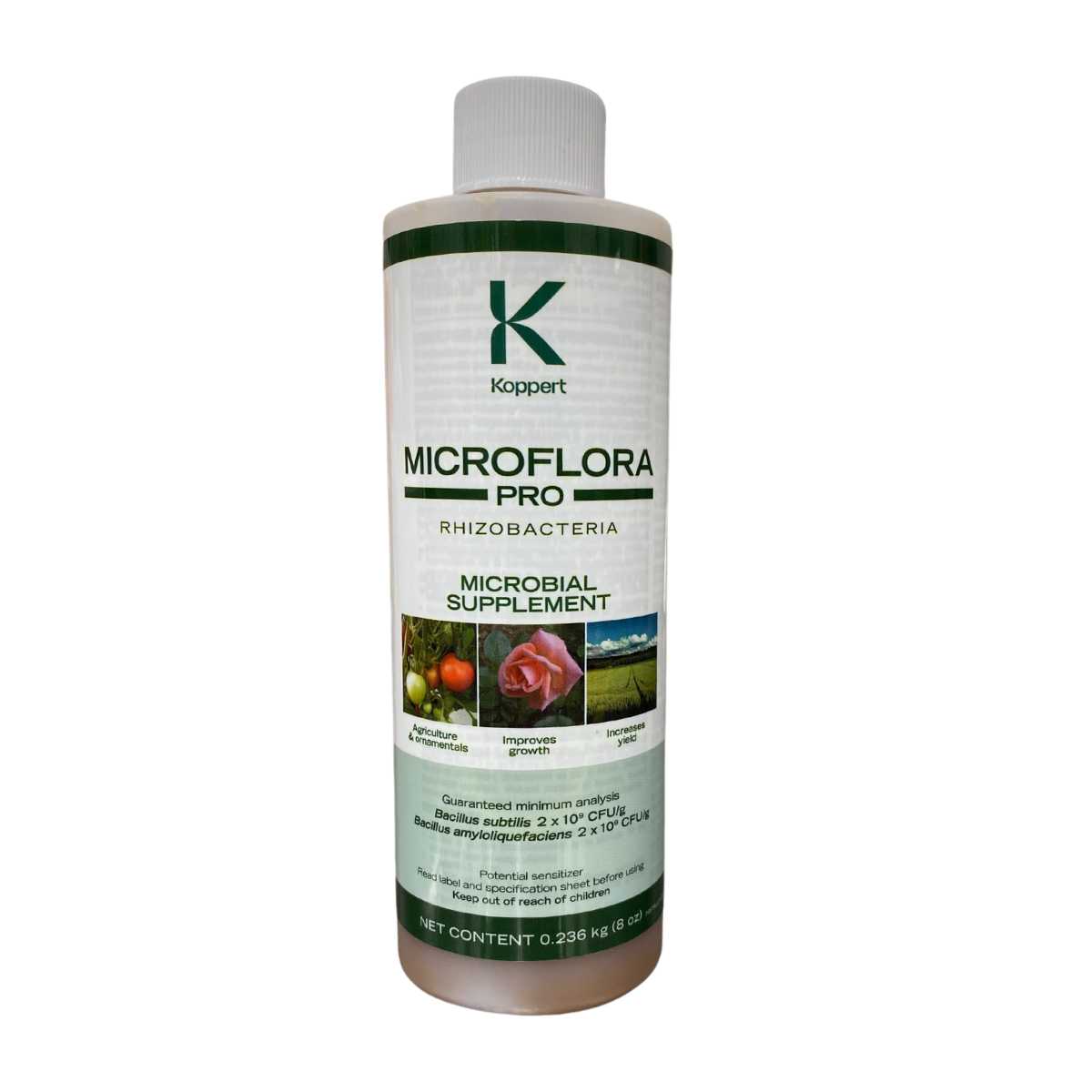
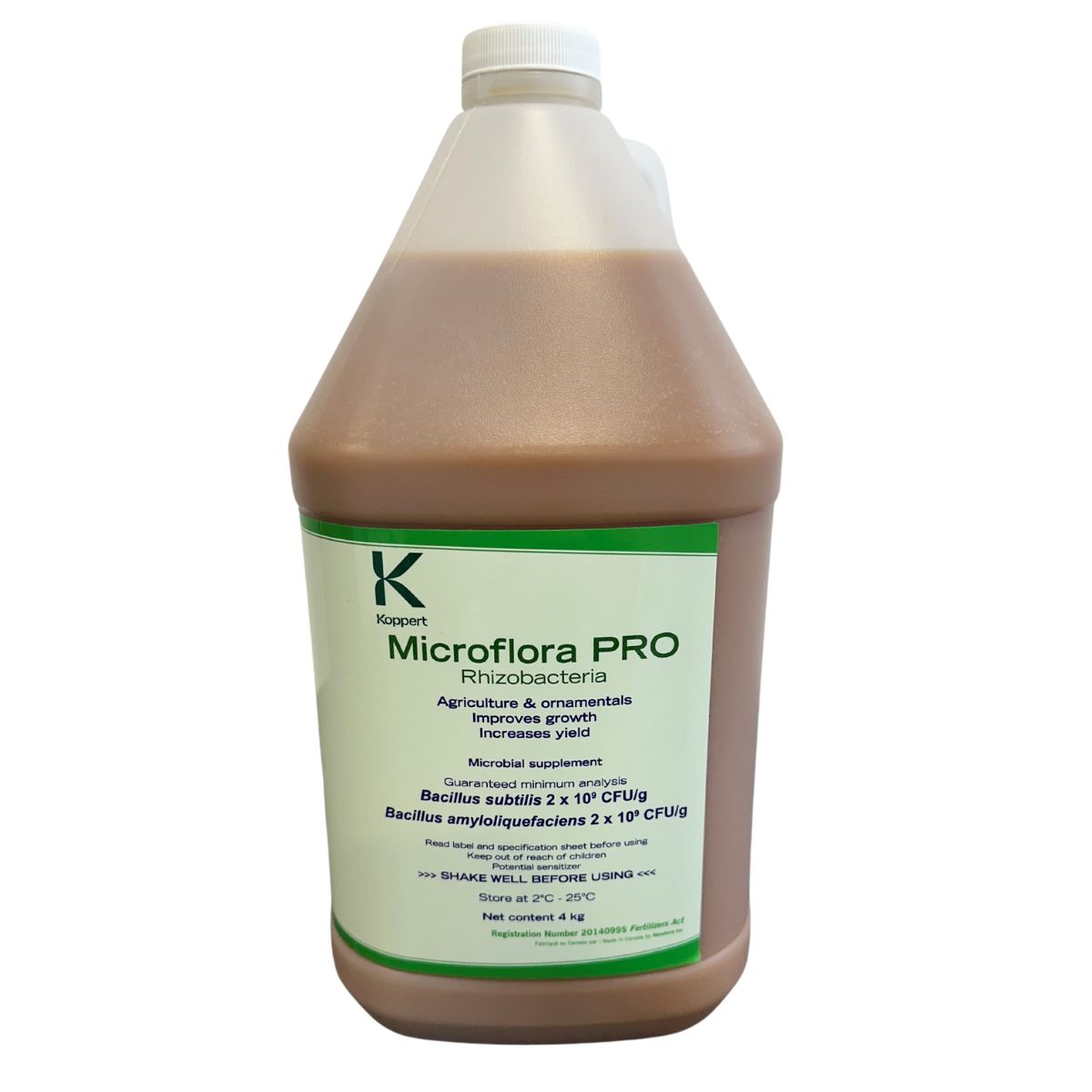
A bottle of Microflora Pro with branding and information printed on the label.

Monitoring & Follow-up

You won’t see the bacteria themselves, but you may notice these positive changes over time:

  • Stronger, healthier root systems
  • Increased leaf growth and vigor
  • Better uptake of key nutrients
  • Improved resilience during stress events

The effects are progressive. They accumulate as the root microbiome becomes more established and active.

Tips for Growers

  • Apply early in the crop cycle: Introducing beneficial bacteria at seeding, transplant, or early vegetative stages gives them time to colonize roots and deliver the greatest benefit.
  • Target the root zone: Drench the product so it reaches the root area. Good root contact is key to successful establishment.
  • Repeat applications for consistency: Re-apply at regular intervals to maintain an active microbial population, especially during periods of rapid growth or stress.
  • Check tank mix compatibility: Avoid mixing with strong disinfectants or antibacterial products that could reduce microbial viability.
  • Store properly before use: Keep product within recommended temperature ranges and use before the expiry date to ensure live bacteria performance.
  • Be patient and observe: Results build over time. Look for stronger roots, improved vigor, and more uniform growth rather than immediate visual changes.

A: They live on roots and make nutrients more available, stimulate plant growth hormones, and help plants handle stress.

A: Early in plant growth is most effective, but repeat applications can help throughout the crop cycle.

A: Yes. It is compatible with most liquid fertilizers and can be mixed in tank applications.

A: Yes. Beneficial rhizobacteria do not affect insects and are safe for your IPM program.