Aphidius matricariae

Green icon of a mite on a green background

What is Aphidius matricariae

Aphidius matricariae is a tiny parasitic wasp used to biologically control small aphid species in greenhouses, nurseries, and indoor crops. These wasps are well-adapted to finding and parasitizing common aphids that fall under the genus Myzus spp., as well as the Cannabis aphid (Phorodon cannabis).

As a parasitic wasp, Aphidius matricariae helps reduce aphid populations not by consuming them directly as predators do, but through internal parasitism. Female wasps deposit eggs inside live aphids, and the developing larvae feed within the pest’s body, eventually halting its reproduction and killing it. This form of control supports sustainable pest management with minimal chemical use.

Here’s What They Look Like at Different Stages of Their Life:

Because parasitic wasps are small and discreet, many new growers are unsure what to look for after release.

  • Egg: Eggs are laid inside the aphid and cannot be seen.
  • Larval: The larva develops inside the aphid, feeding internally. During this time, the aphid becomes inactive and stops reproducing.
  • Pupal (mummy): The aphid turns into a swollen, tan to brown shell called a mummy. These mummies remain attached to leaves and are the most visible sign that control is working.
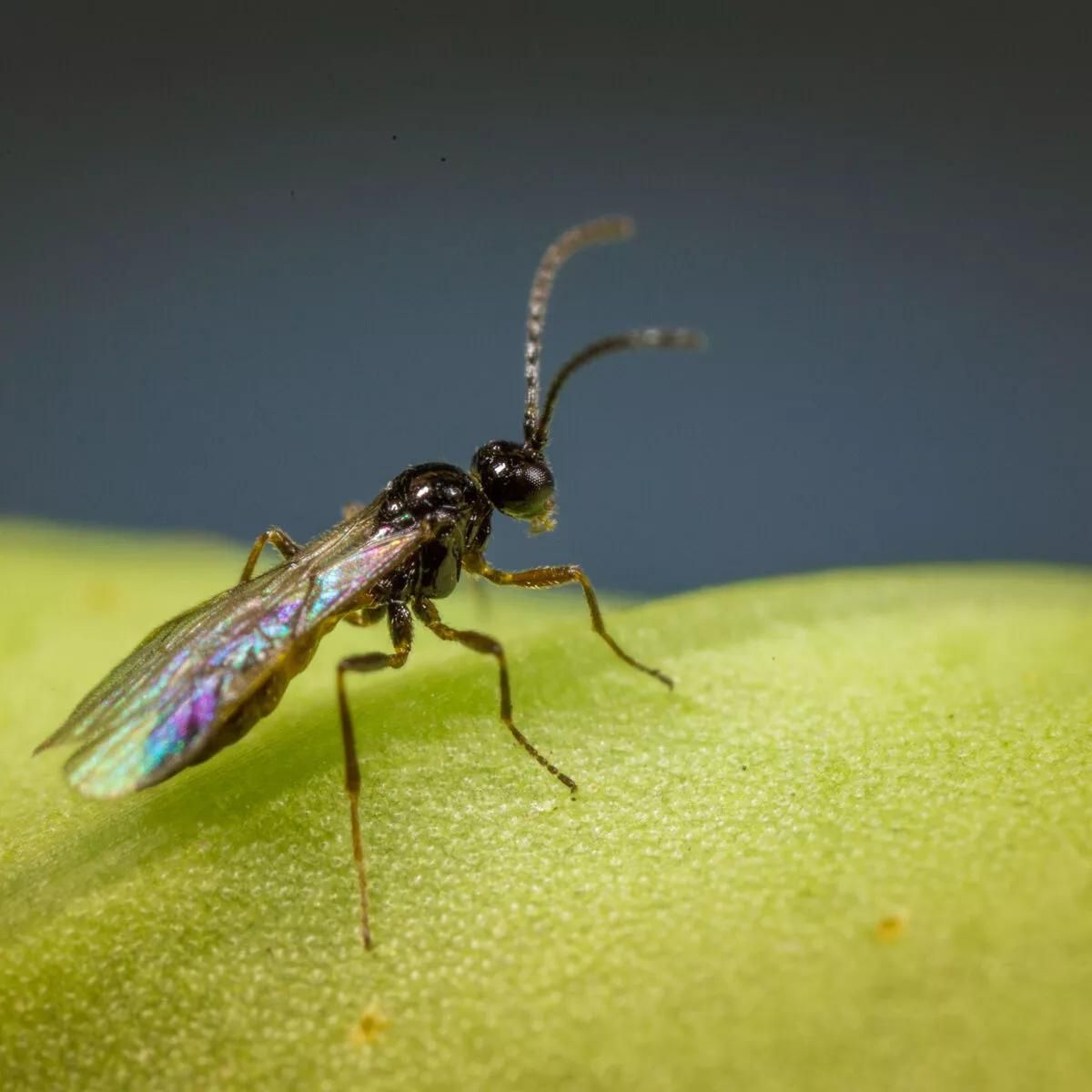
  • Adult: Aphidius matricariae adults are small parasitic wasps, about 3–4 mm long. The biology of Aphidius matricariae closely resembles that of Aphidius colemani. The distinction of this species is the fine stripes on the sides of the wasp's waist.

Behavior: A. matricariae has a very effective searching behavior, which enables the wasps to track down and parasitize aphids, even when they are at low density.

Why Growers Love It:

  • Fast-acting control of small aphid species
  • Actively searches crops for aphids
  • Builds its own population in the crop
  • Easy to integrate into IPM programs
  • Safe for people, plants, and beneficial insects
Aphipar-m insect photo: aphidius matricariae
Two small insects on a white background
Aphid mummy on a green leaf
Small insect on a green leaf

When to use Aphidius matricariae

Timing is critical to achieving success with parasitic wasps. They perform best when introduced before pests reach outbreak levels.

Preventive use:

  • ID aphid to ensure it is the cannabis aphid (Phorodon cannabis), cotton aphid (Aphis gossypii), tobacco aphid (Myzus persicae var. nicotianae), or the green peach aphid (Myzus persicae var. persicae).
  • Apply early when aphids are first detected or when aphids are expected based on past crop history.

Curative use:

  • Effective when small aphid species are already present, especially at low to moderate population levels.
  • Multiple releases will be required if pest pressure is high or crop is mature and dense.

Environmental Conditions:

  • Performs best between 15–25°C, with activity decreasing below 15°C.
  • At temperatures above 28°C, efficacy is reduced.
  • Suitable for vegetables, ornamentals, herbs, and indoor plant production.

Note: Monitoring is essential. After 14-21 days from the first release, inspect leaves, flowers, and fruit clusters to determine if additional releases are required. Specifically look for adults and mummified aphids.

How to release Aphidius matricariae

Proper release techniques ensure Aphidius matricariae establish quickly and begin controlling pests effectively:

  1. Distribute the product: Release mummies evenly throughout the crop. A. matricariae is very mobile and will fly around. Distribute the product evenly over the growing medium or place it into application boxes (Dibox) for release. Make sure the material remains dry and stays at its introduction site for a few days.
  2. Recommended density: Release rates typically range from 0.25 to 4 adults per m², depending on crop type, infestation level and crop stage.
  3. Follow‑up releases: In curative situations or severe infestations, multiple releases, every 7–14 days often improves establishment and control.
  4. Avoid interference: Do not release immediately before or after broad‑spectrum insecticide applications. If treatments are needed, choose only those compatible with beneficial insects.

Formulations & How to choose

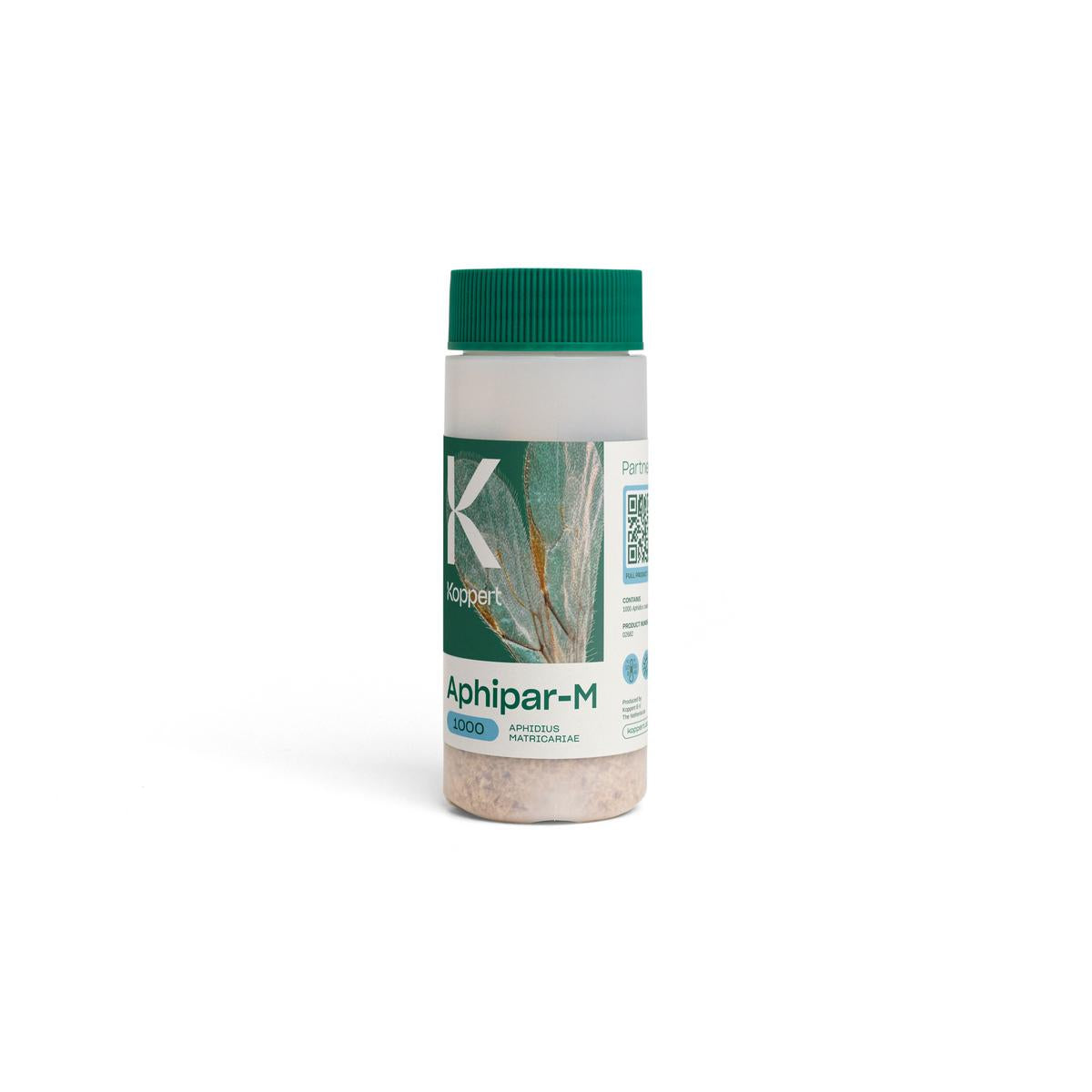
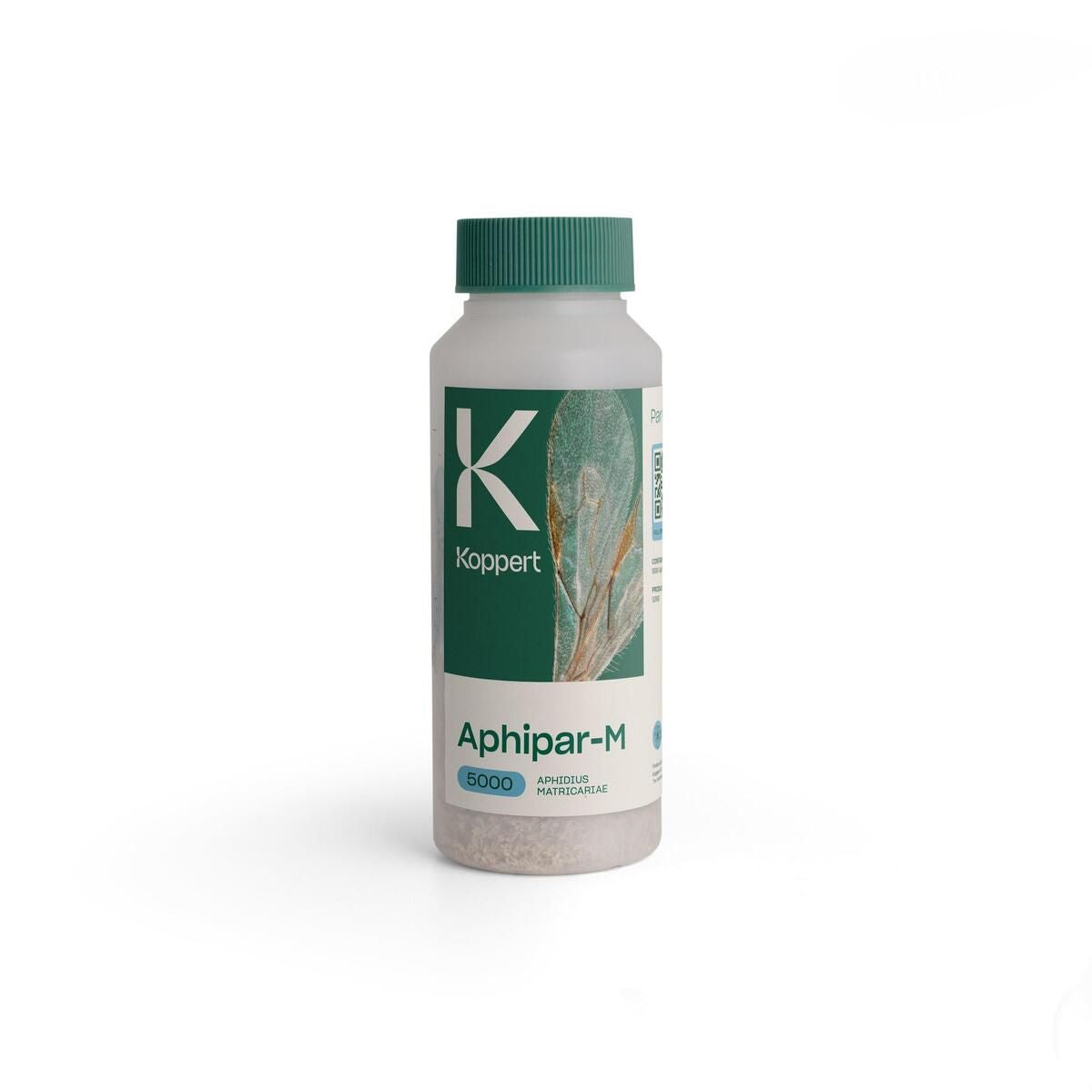
Bottle
  • Description:
    • Contains mummies in wood chips
  • Best use:
    • Use when you want to prevent or control the amount of the cannabis aphid, cotton aphid, tobacco aphid, or the green peach aphid in your growing space.

Tips for Selecting Rate:

  • For dense crops, high pest pressure or curative use → choose a higher rate and repeat releases, weekly or bi-weekly (every 7-14 days).
  • For preventive use in low‑pressure crops → choose a lower preventative rate, and watch for product establishment.
  • Always match release strategy to crop size, foliage density, pest risk, and environment.
 
Small bottle of aphipar-M 1000, 100ml

Monitoring & Follow-up

Visual checks: After 14-21 days from the first release, inspect leaves, flowers, and fruit clusters to determine if additional releases are required. Specifically look for adults and mummified aphids.

Supplemental releases: If aphid count remains high or increases, consider additional releases or review your IPM plan for gaps (e.g., residual pesticide effects, low humidity zones, new pest introduction).

Record‑keeping: Track release dates, environmental conditions, pest levels and predator observations to refine future programs.

What to Expect After Release:

  • First week: Adult wasps begin parasitizing aphids.
  • 2-3 weeks: Aphid mummies become visible, indicating successful parasitism.
  • Ongoing: New adult wasps emerge from mummies, continuing aphid control across the crop.

Because parasitic wasps work biologically, control is progressive, not instant. Monitoring aphid levels and mummy formation is the best way to track success.

Tips for Growers

  • Start releases early for best aphid suppression
  • Focus monitoring on aphid mummies, not adult wasps
  • Maintain suitable temperatures for optimal activity
  • Combine with cultural controls like removing heavily infested plant material and other predatory insects like Chrysoperla carnea for instant control.
  • Use as part of a balanced IPM strategy for long-term aphid management

A: It is most effective against the cannabis aphid (Phorodon cannabis), cotton aphid (Aphis gossypii), tobacco aphid (Myzus persicae var. nicotianae), or the green peach aphid (Myzus persicae var. persicae).

A: You will see aphid mummies within 2-3 weeks of the first application.

A: Adults are small and often go unnoticed. Aphid mummies are the best indicator that the wasps are active.

A: Yes. Aphidius matricariae is a natural biological control and poses no risk to people or plants.